


Salford university scheme helps industry veterans use AI to tackle chronic problems
13 October 2026

Nima and the Digital Operations Working Group (DOWG) will work together to fix the structural misalignment in how built environment data is captured, handed over and managed.
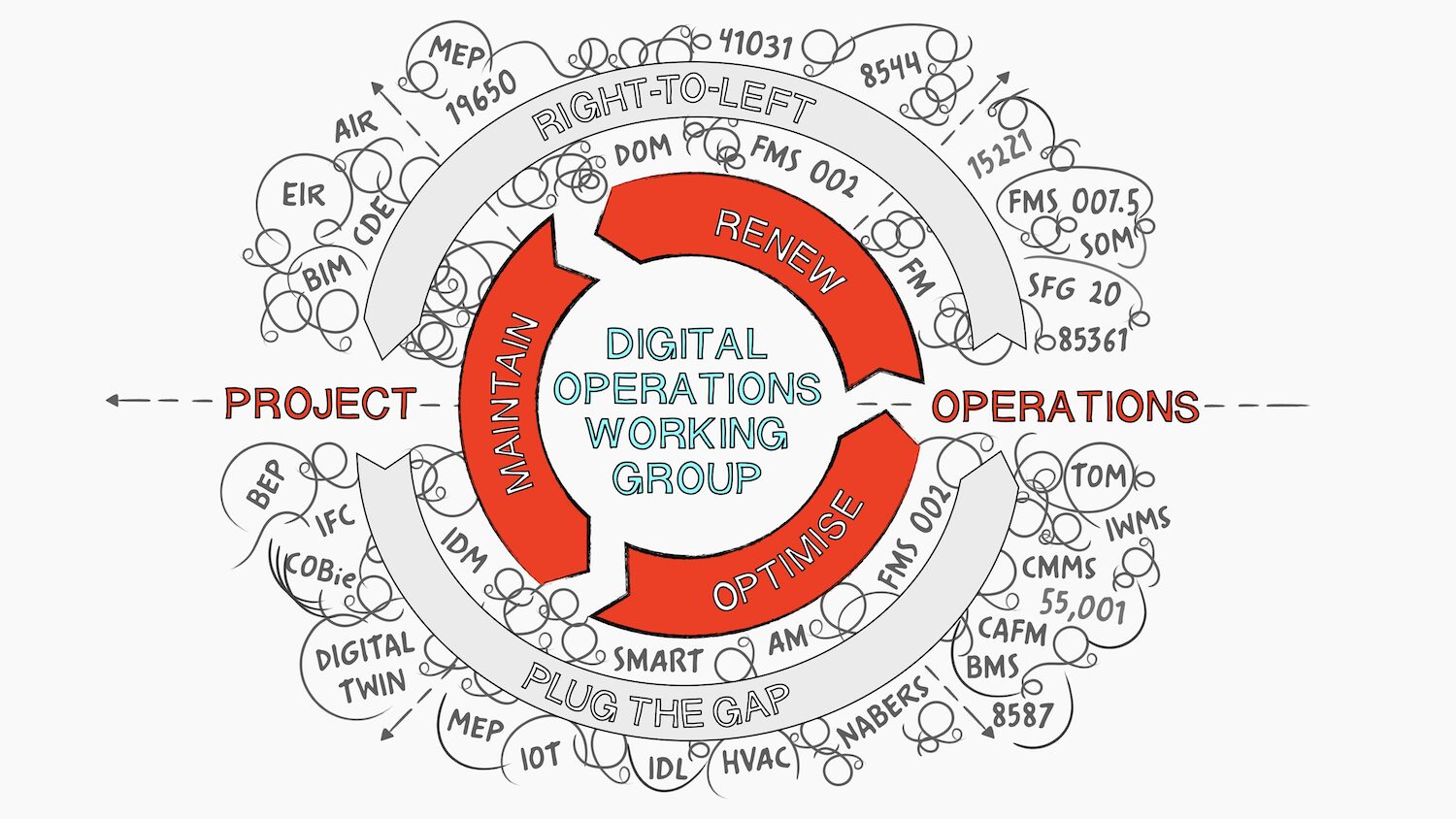
The two organisations announced their collaboration at Digital Construction Week today (3 June). In effect, the DOWG will provide “pragmatic, realistic steps that make [nima’s] Information Management Initiative actionable for complex estate management on the ground”. The DOWG will lead the IM for Digital Operations (IM4DO) group for nima.
To ensure this work remains “deeply rooted in the practical needs of estate management”, the DOWG has established an expert advisory panel. The first panel members named include: Alex Plenty, head of digital construction at Skanska; Jo Harris, UK & Ireland head of technical services at Sodexo; and Andy Green, director at AtkinsRéalis and lead of the ADS Alliance.
The collaboration is the result of the growing recognition that efforts to improve sector-wide information management best practice must embrace the full operational life of an asset and not just the capital delivery phase. The DOWG – established by Steven Boyd MBE, Gordon Mitchell FIWFM and Justin Kirby – wants to create a ‘digital handshake’, a formal connection between capital delivery and long-term estate management.
The core goal of the collaboration is to ensure the industry collects and manages only the data needed for the operational activity necessary to deliver real, measurable outcomes for asset owners. This is aligned with the DOWG’s ‘right-to-left’ methodology, which mandates that successful digital operations and smart buildings must start with the asset owner’s desired outcomes and the operator’s requirements, rather than simply accepting the data the contractor has available at the end of the project.
The DOWG’s upcoming Digital Operations Playbook addresses this by setting out an approach that aligns existing, fragmented industry standards – including 19650, 41001, NRM3 and SFG20 – into a single, unified framework. This approach enables a true ‘digital handshake’, replacing massive dumps of available project data at handover with the effective, targeted sharing of the precise data required for operations, according to the DOWG.
The playbook is in the early stages of development, and the DOWG wants interested parties to get involved in its creation.
Boyd called on those in the audience at DCW to have their say: “What should the playbook look like? What should its contents be? How can we make it as simple as possible, and still deliver the aims? We’ll build it together, a solution for the community, by the community, as simple as it possibly can be, so everyone can buy into it.”
Mitchell added: “The importance of what we’re trying to achieve is that it lands. Common language is really critical to all of this. We need to understand how to move and work together, and language is a critical foundation of that. So, part of the playbook is about trying to find those nuances, find those collective points. We can connect communities across the lifecycle, and that’s where we need all of your help.”
Interested parties can approach Boyd and Mitchell via LinkedIn.
Dr Anne Kemp OBE, chair of nima, said: “As steward of the IMI, nima is committed to a wholelife approach to information management in the built and managed environment. This collaboration with the DOWG will help to accelerate our direction of travel.”
Steven Boyd MBE, co-lead of the DOWG, added: “The DOWG collaborates across the sector to raise the standard of built environment operations by joining the dots across existing guidance. Working in collaboration with nima will expand our reach and support our mission.”
Gordon Mitchell FIWFM, co-lead of the DOWG and nima’s head of digital operations, added: “Digital transformation cannot stop at project completion. The real value of information is realised during operations, where data becomes intelligence that supports safety, performance and wholelife outcomes. This collaboration is about creating a practical ‘digital handshake’ that not only joins the dots between project delivery and operational reality, but helps unify the system around the information actually needed to operate, maintain and improve our built environment.”
Boyd told DCW delegates: “I’ve got three things I’d like you to take away. First, I’d like you to think right to left, starting with business outcomes. I think that’s critical. Second, I’d like you to think of project handover as the start of operations, not as the end of a construction project. And third, think not about what the Digital Operations Working Group can do for you, but what you and the community can do to help join that community up.”
Mitchell added: “I think RIBA Stage 6 being the start of operations can really make a difference, because it’s certainly not how it’s viewed at the moment. If we can get into that understanding that this is how we all start to work together, I think that will be one very, very critical point, and that might start to tease out more of an informed client.”
Keep up to date with DC+: sign up for the midweek newsletter.