



How Peri’s investment in digital concrete monitoring 10 years ago is paying off
11 August 2026

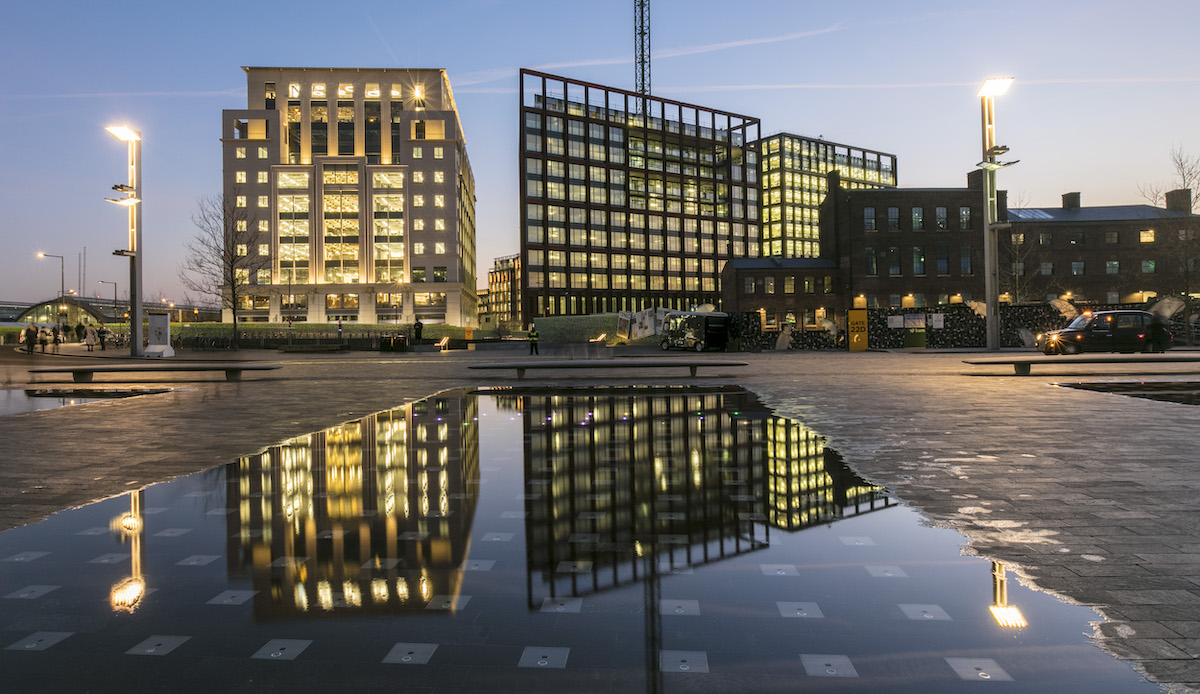
An already energy-efficient London office building has cut ventilation energy use by 31% using intelligent software and IoT sensors, without upgrading its existing HVAC systems.
3 Pancras Square is a 10-storey commercial office building on London’s King’s Cross Estate and home to creative agency Havas UK.
It already had 70% heat recovery and CO₂-based ventilation optimisation in place but Havas wanted more, so it engaged building technology company Envelo to explore whether smarter control of the existing system could realise further savings without compromising health and comfort.
Independent analysis by engineering consultancy Hoare Lea found that Envelo’s AUTO platform cut ventilation energy use by 31% across the independently validated portion of the building. The project achieved a 13-month payback, while air quality was maintained and improved across several measured indicators.
Based on whole-building estimates using the same methodology, Envelo is expected to deliver annual energy cost savings of £46,000, a net annual return of £23,000 after costs and a 97% annual return on investment from year two onwards.
The project is also expected to save 31 tCO₂e a year, equivalent to a sustained 5.8% reduction in Havas UK’s total Scope 2 carbon emissions.
Joe Nettleton, building services director at Havas UK, said: “At Havas, we are committed to reducing energy consumption and CO₂ emissions whilst continuing to provide healthy, high-performing workplaces for our people.
“Envelo’s SaaS solution has been instrumental in delivering energy savings and IEQ (Indoor Environmental Quality) improvements in the face of a technically challenging environment.”
Envelo’s software-as-a-service solution operates as an intelligent optimisation layer above a building’s existing building management system (BMS).
Using real-time information from IoT sensors measuring CO₂, humidity, temperature, volatile organic compounds (VOC) and particulate matter, alongside outdoor conditions, Envelo continuously calculates the ventilation required and sends instructions directly to the BMS.
The approach requires no new HVAC infrastructure or BMS hardware, allowing the technology to be deployed quickly and with minimal disruption to building users.
At 3 Pancras Square, Envelo optimised the building’s constant air volume (CAV) ventilation system by reducing airflow when less ventilation was required and switching it off entirely during periods of low occupancy or when indoor air conditions allowed.
This enabled ventilation to be switched off for an average of 21 hours per week per floor, equivalent to 42% of operating hours.

Significantly, reducing ventilation runtime did not come at the expense of indoor air quality.
Time spent above high CO₂ thresholds fell in meeting rooms, overly dry conditions during winter were reduced and breaches of fine particulate thresholds declined. No complaints relating to stuffiness or discomfort were reported during the project.
Across the measured indicators, time above 1,200 ppm CO₂ fell by 23%, periods of overly dry air were reduced by 34%, PM2.5 breaches fell by 70–100%, and exposure above the specified VOC threshold fell by around 20%.
The results demonstrate the potential for intelligent controls to reduce unnecessary ventilation operation while maintaining or improving indoor air quality.
Envelo says the project demonstrates how software and real-time building data can unlock extra performance from existing infrastructure.
“The results show that there can still be significant opportunities to improve building performance by using real-time data and intelligence to optimise existing infrastructure,” said Steve Burch, Envelo’s co-founder and chief operating officer.
“At 3 Pancras Square, that has meant substantially reducing ventilation energy use while maintaining or improving indoor air quality, without the capital cost and disruption of replacing the HVAC system.”
The project also points to the potential for wider application across commercial property, particularly in buildings with less sophisticated ventilation controls or limited visibility of occupancy and indoor conditions.
Contact Envelo for a full case study.
Keep up to date with DC+: sign up for the midweek newsletter.