



How Peri’s investment in digital concrete monitoring 10 years ago is paying off
11 August 2026

Just as handover is rising up the agenda here, so it is a focus for information management elsewhere – including in New Zealand. Here, Beca’s Glenn Jowett and Hamilton City Council’s Fran McInnes reveal the approach taken to achieve 100% structured data at handover on a water project.
Asset data handover remains one of the most inefficient and error-prone stages in infrastructure delivery. Too often, critical asset data is incomplete, inconsistent or delayed, limiting its value long after construction is complete.
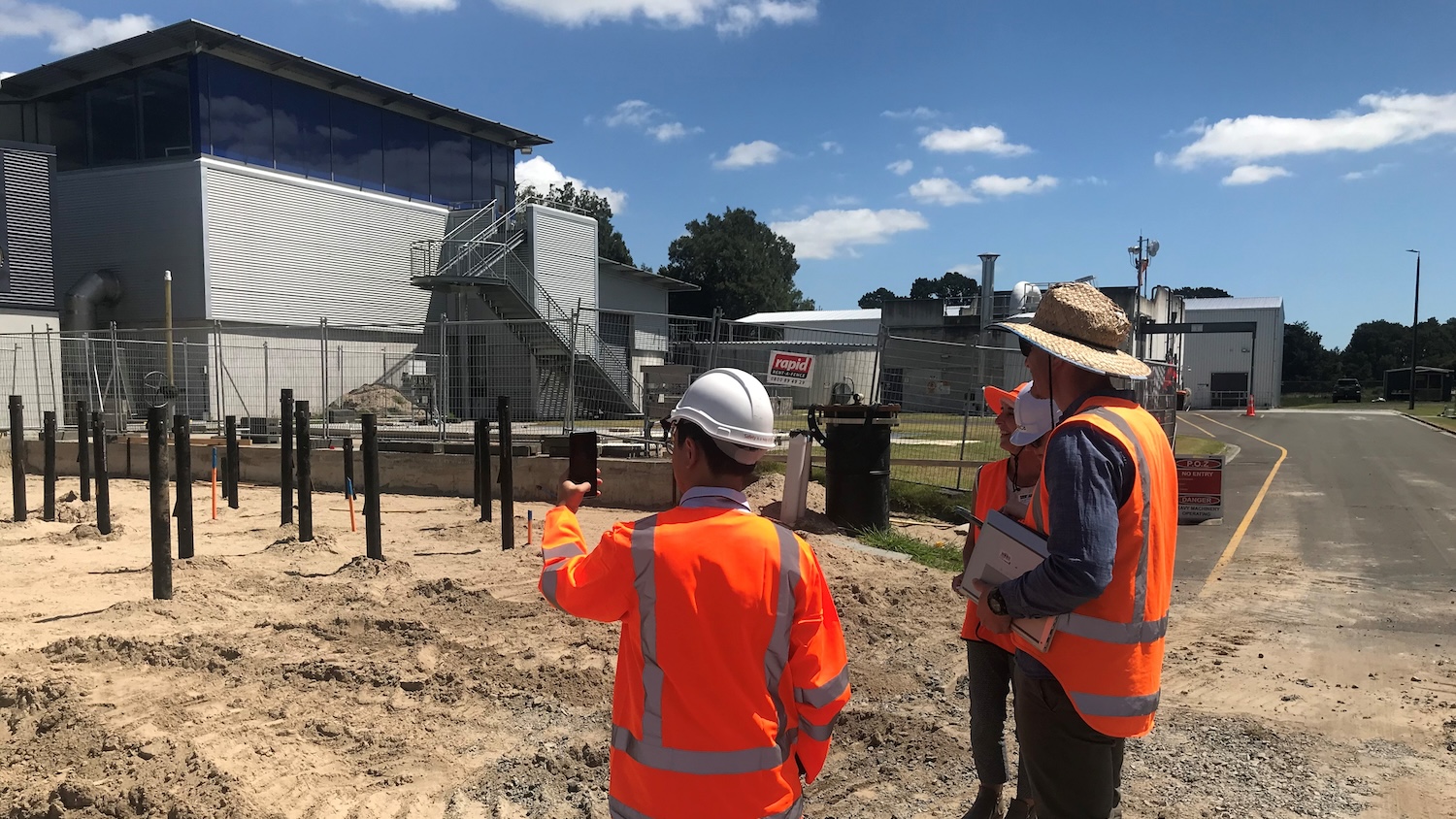
On Hamilton City Council’s (HCC) Waiora Water Treatment Plant upgrade in New Zealand, the project team set out to challenge this norm. The result was a fundamentally different approach to asset data handover, one that delivered verified asset data nearly two years earlier than traditional methods.
The Waiora upgrade project included a new 40 million litres-per-day micro-filtration treatment plant alongside major supporting infrastructure, including tanks, chemical handling facilities and underground services. As with many water infrastructure projects, the complexity of the asset highlighted a persistent industry issue: the gap between construction delivery and usable asset data.
Traditionally, contractors provide handover information in the form of pdfs and fragmented documentation. This approach often results in:
The consequence is a prolonged delay before assets can be fully capitalised, maintained or depreciated, leaving ‘ghost assets’ lingering in financial and operational systems.
Rather than treating asset data as a by-product of delivery, the Waiora project embedded it as a core outcome. The project team, comprising HCC as asset owner, Beca as BIM manager and Neuflow as project manager, developed a structured asset data strategy early in delivery.
Central to this was a clearly defined data schema that established:
This provided a consistent framework for all parties and ensured alignment between construction activities and asset management requirements.
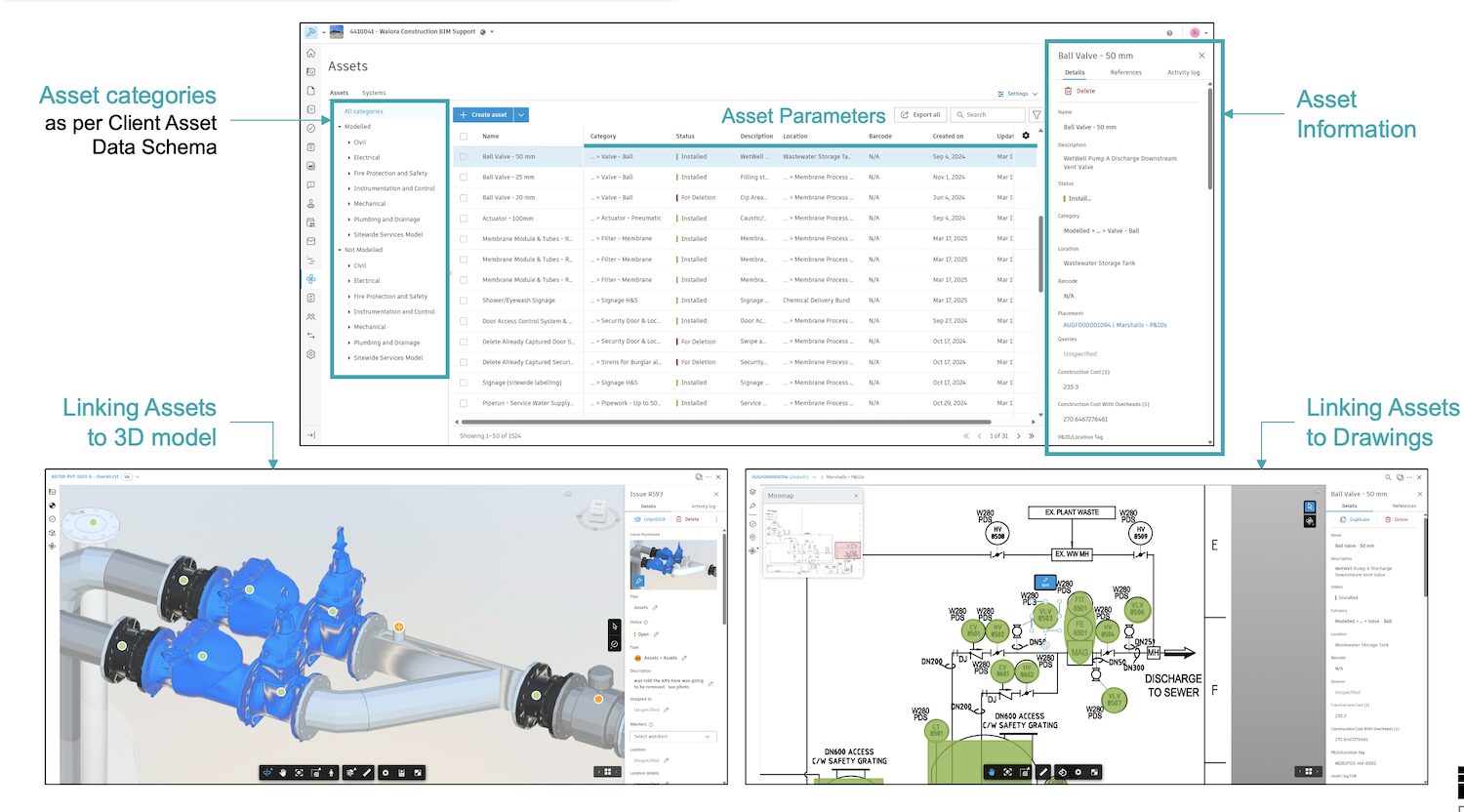
To support this approach, the team implemented the Autodesk Construction Cloud (ACC, now Forma) Assets module as a centralised, cloud-based data environment.
This enabled contractors and project teams to progressively capture and validate asset data throughout construction, rather than deferring the process to project close-out.
The platform integrated 3D models and 2D drawings with structured data forms, allowing assets to be identified, tagged and populated with information in a single system. Careful configuration, including drop-down fields and standardised inputs, minimised manual effort while improving data quality and consistency.
A project-specific workflow, supported by training and field-ready mobile processes, ensured that asset data capture became part of day-to-day construction activity
Implementing a digital-first approach to asset handover was not without challenges. One key issue arose where individual model elements represented multiple physical assets. This was addressed by using model-based ‘issue pin’ tools, traditionally used for model coordination, to define and capture data at the appropriate level of detail.
Another challenge was validating large volumes of bulk-uploaded data. The team resolved this by linking datasets directly to process and instrumentation diagrams within the platform, enabling efficient cross-checking against verified design and shop drawing information.
These solutions reinforced the value of maintaining all project information within a single, connected digital environment.

“Collecting asset data for such a complex site felt quite overwhelming to start with. As I became more familiar with navigating the digital model and P&IDs, the process evolved into a structured and systematic approach to asset verification and data capture. The ability to use the model on site made it significantly easier to find and verify assets, and the use of colour-coded tracking made it much quicker to capture progress and identify what had and hadn’t been completed, compared to working through thousands of rows in a spreadsheet.”
The results represent a significant shift in how asset data can be delivered on infrastructure projects.
Over the course of the project:
In practical terms, this meant:
This project is the realisation of a long-term strategy and a step-change in how asset data is delivered in New Zealand’s water sector.
While digital tools played a critical role, the project’s success was not driven by technology alone. It depended on:
By embedding data capture into everyday workflows, the team ensured that digital processes were not an additional burden, but a natural extension of delivery.
The challenges seen on Waiora are not unique. Across the infrastructure sector, poor asset data continues to limit operational performance and undermine long-term value.
This project demonstrates that a different approach is possible. By treating asset data as a core deliverable, and aligning people, processes and technology accordingly, projects can unlock significant benefits across the asset lifecycle.
High-quality, structured data enables:
As infrastructure systems grow in complexity and scrutiny increases on asset performance, the importance of reliable data will only continue to rise.
The Waiora project provides a clear example of how digital delivery can move beyond design and construction, and begin to transform how assets are handed over, managed and maintained for the long term.
Keep up to date with DC+: sign up for the midweek newsletter.