


How intelligent software and real-time data made a great HVAC system better
13 October 2026

Conserving heritage buildings places a heavy emphasis on traditional craft skills, but that doesn’t mean being a digital laggard. Heritage specialist DBR details its digital journey, in particular its switch from server rooms to the cloud.
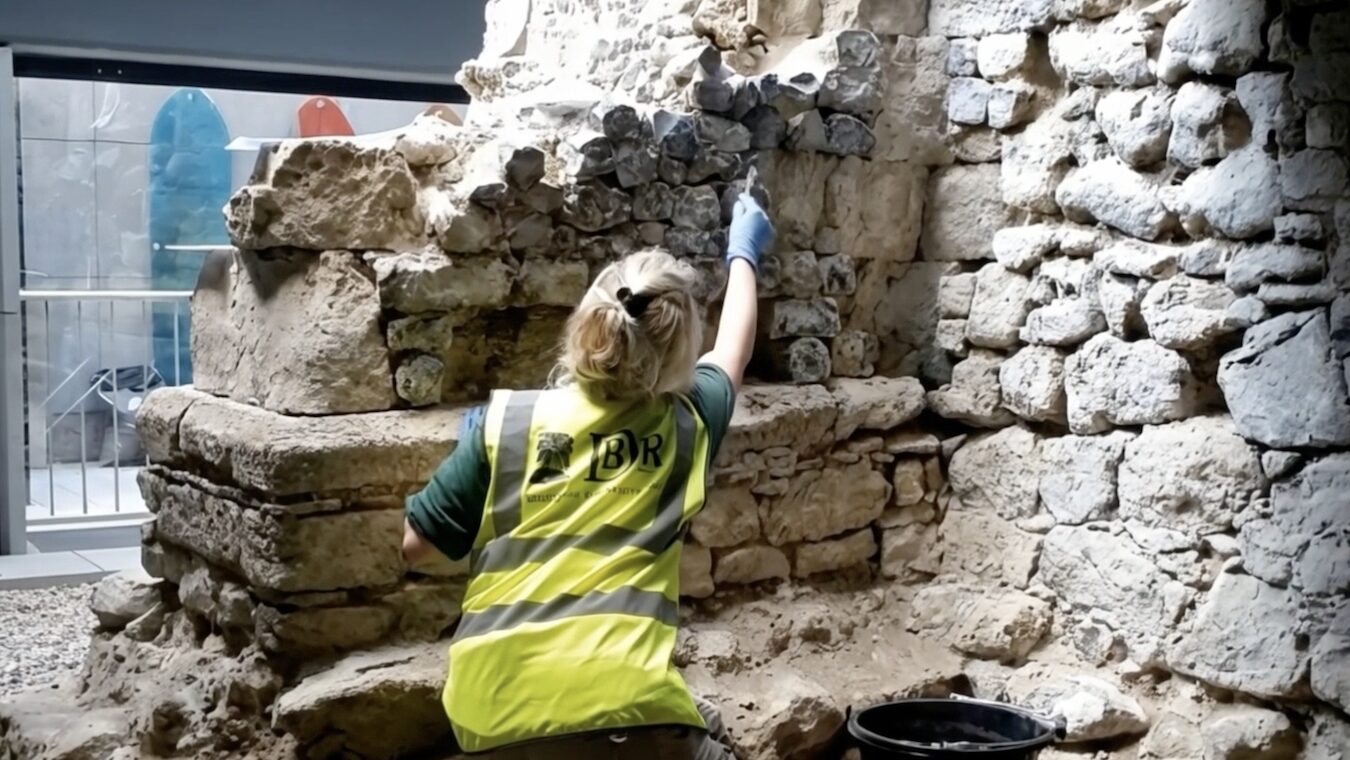
When it comes to preserving and restoring the UK’s most historic buildings, the structures rarely reveal exactly what the drawings suggest. A discovery can change the required repairs, the programme, the materials and the cost. For conservation contractor DBR, recording that change and getting the right information to the right people at the right time is just as essential as looking after the building itself.
DBR has spent more than three decades growing from a small masonry subcontractor into one of the UK’s leading conservation specialists and now holds a Royal Warrant. Its project portfolio includes the Palace of Westminster, Buckingham Palace and Windsor Castle, Blenheim Palace and the Natural History Museum, Westminster Abbey and the V&A.
The business employs around 100 management staff and craft specialists and runs 30 to 40 live projects simultaneously.
That scale generates far more data than most people would associate with heritage work. “It’s quite a lot of detailed information that’s produced,” says Adrian Attwood, executive director and chairman of DBR. “And some of our sites are highly secure, such as the Palace of Westminster, which requires extensive digital data security.”
With teams spread across dozens of sites, DBR wanted to build on its existing systems to make project information more readily accessible, while maintaining security and supporting the company’s continued growth.
Most DBR projects produce drawings, specifications, correspondence, photographs and video, alongside BIM models and survey data from the company’s own drone division. The records cover not only the work itself, but also what was uncovered when a building’s historic fabric was opened up, and how the plan changed as a result.
Keeping those records is a long-term commitment, Attwood says. They are needed through the 12-month defects liability period and for future maintenance, and DBR retains them for 15 years to meet its PI requirements. On security-cleared projects, such as the royal residences and government buildings, the data is also segregated within the company’s CDE where only cleared staff can view it.
That security has to be balanced against speed, with site and office teams viewing and uploading documents throughout the day. “If you can’t access the data, it slows everything down,” Attwood says. “Change is our business. If there are delays, the cost of manpower standing still on site, of hired offices and scaffolding mounts up to quite significant sums. You need the record-keeping in place so you’re not caught with a large bill.”
Like many contractors of its size, DBR once kept most of its information on physical servers in the office, with local backups and files accessed through network shares. Data was fragmented, remote access was clunky, hardware warranties were expiring, and Microsoft’s support for the Windows Server 2012 operating system was approaching end of life.

“We haven’t got a big machine in the corner of the room humming away anymore. We’re now much less susceptible to data loss, and updates and patching are better.”
For Vish Baburajan, senior account director at DBR’s longstanding IT partner Utilize, business continuity was a key driver for change. “DBR’s main business is the skilled workers out in the field,” he says. “Moving to the cloud meant less dependence on services hosted in the office to keep projects moving. If a fire or another incident made the building inaccessible, teams could still access the systems and information they needed, without waiting for equipment at the office to be restored.”
That’s when DBR decided to remove the servers from the office altogether and transfer all its data and applications into the cloud.
The migration ran in two stages. Multiple terabytes of project files, including subcontract data, plans, designs and site photography, moved from the file servers into Microsoft SharePoint. The remaining server-hosted applications then moved to Microsoft Azure, with Teams adopted for day-to-day collaboration.
The switchover took place over a weekend, so staff could log in on Monday morning and carry on working, with Utilize coordinating the timing with the vendors of DBR’s line-of-business software.
DBR no longer keeps physical servers on site. “We haven’t got a big machine in the corner of the room humming away anymore,” Attwood says. “We’re now much less susceptible to data loss, and updates and patching are better.” He is unequivocal about the level of peace of mind moving to the cloud has given him: “Absolute peace of mind, 100%.”
For site teams, the biggest change is access. Anyone with the right permission level can access the same information as they would if they were in the office, whether on a laptop, tablet or a mobile phone. “If I don’t have connectivity on my laptop, I can go straight into SharePoint on the phone app and check documents, which is convenient and fast,” Attwood says.
Large photo and video files no longer clog inboxes and can be shared securely with outside parties through SharePoint or Teams. Multi-author documents such as bid submissions can now be worked on live by several people at once. DBR estimates the changes have improved productivity by 15%-20%.
This efficiency is feeding directly into the firm’s growth. “Our new processes and the speed at which we now manage data help us deliver bid submissions more quickly, which also helps us win more business,” Attwood says.
For a contractor working for Parliament, the Royal Household and high-net-worth clients, security is not optional. DBR regularly answers detailed questionnaires on how it stores, retains, removes and controls access to data, and the requirements are getting stricter. Without the right credentials, the firm would not be able to bid for much of the work on which it’s built its reputation.
Meeting clients’ Information Security Management Plan (ISMP) requirements is an essential part of this work. Secure, segregated systems help DBR protect sensitive project information, alongside the Cyber Essentials Plus certification it is required to maintain.
Utilize helps DBR manage this accreditation, with user access control forming one of the scheme’s five core controls. In practice, DBR’s security goes further: every log-in is checked for who the user is, where they’re signing in from, whether the device is known and managed, and what it’s allowed to do. Multi-factor authentication is standard, and a 24/7 security operations centre monitors for threats and responds to them.
Without this level of cybersecurity, the company couldn’t take on its most sensitive projects, Attwood says. “It means we can operate in a highly secure environment with proper gateways, and allows us to tick the boxes we need to get onto tender lists.”
One of the most challenging parts of the migration was helping staff adjust to a new way of working. Moving from familiar network drives to SharePoint and OneDrive required both training and practical support. Alongside group training, onboarding documents and user guides, Utilize engineers were stationed on the office floor during the transition, and staff could book 15-minute one-to-one sessions for specific questions.
This level of ongoing support was crucial to a smooth migration, Attwood says. He’s worked with Utilize for more than a decade, and the relationship has grown from routine IT support into a longer-term technology partnership through the firm’s all-inclusive Ascend programme.
Day-to-day support, managed services and planned improvement projects are covered within a single agreed budget, and the two firms work from a shared technology roadmap that’s reviewed as projects are completed and DBR’s priorities change. The Azure migration was delivered under the agreement.
For DBR, that means more predictable IT spending, with improvements planned ahead rather than put off until they become urgent, and no need for an in-house IT department. “We’d fall behind the latest IT opportunities, and we’d have to employ an IT manager, which would be another expense,” Attwood says. “With Utilize, we have a whole team to draw on for prompt support and sound advice. They also keep us informed about emerging technology and the latest developments in cybersecurity.”
With its project data consolidated in Microsoft 365, DBR has started using Microsoft Copilot to search and summarise its own records within a closed system. “It layers and filters documents within seconds, so we can extract information and produce project data or tender submissions relatively quickly,” Attwood says.
The next phase of its roadmap with Utilize includes strengthening defences against AI-driven threats, extending mobile device management and automating routine tasks. “Technology is changing hugely,” Attwood says. “We need someone looking at what we will need for the next three to five years.”
The buildings DBR works on may be centuries old, but the systems protecting their records cannot afford to be.
Keep up to date with DC+: sign up for the midweek newsletter.