



Nemetschek’s AI guru Julian Geiger: construction needs industry-specific AI tools
14 September 2026

The Manufacturers’ Information Hub (MIH) has successfully delivered its proof of concept to UK Research & Innovation and is now developing a working prototype.
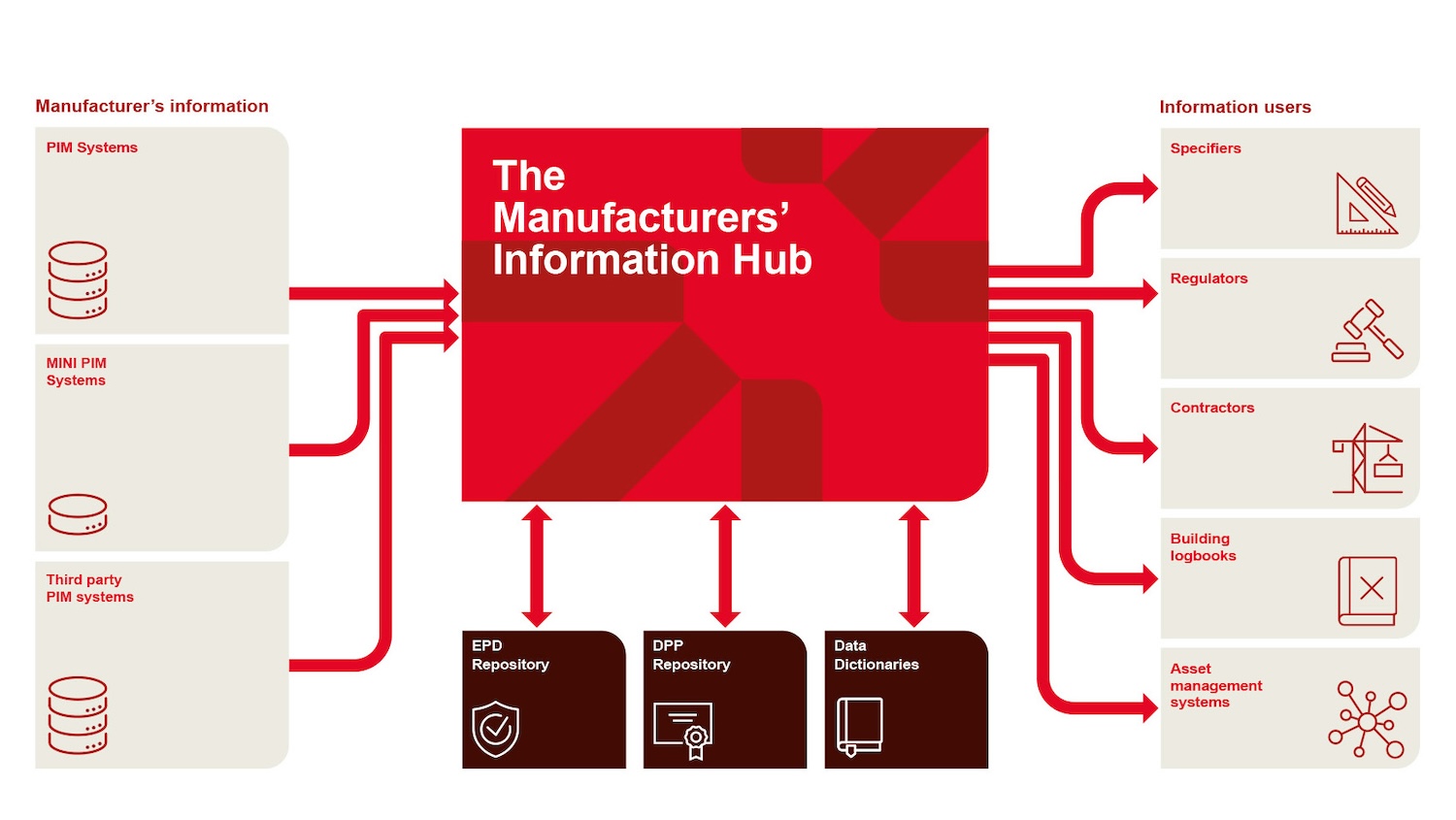
The MIH – the not-for-profit initiative established by manufacturers to develop a single gateway that enables information to flow more efficiently between manufacturers and information users (designers, contractors, distributors, digital platforms and asset owners) – has successfully delivered its proof of concept (POC).
The hub comprises two key processes: how product information is collected from manufacturers and standardised; and the means by which that information can then be accessed by the built environment supply chain.
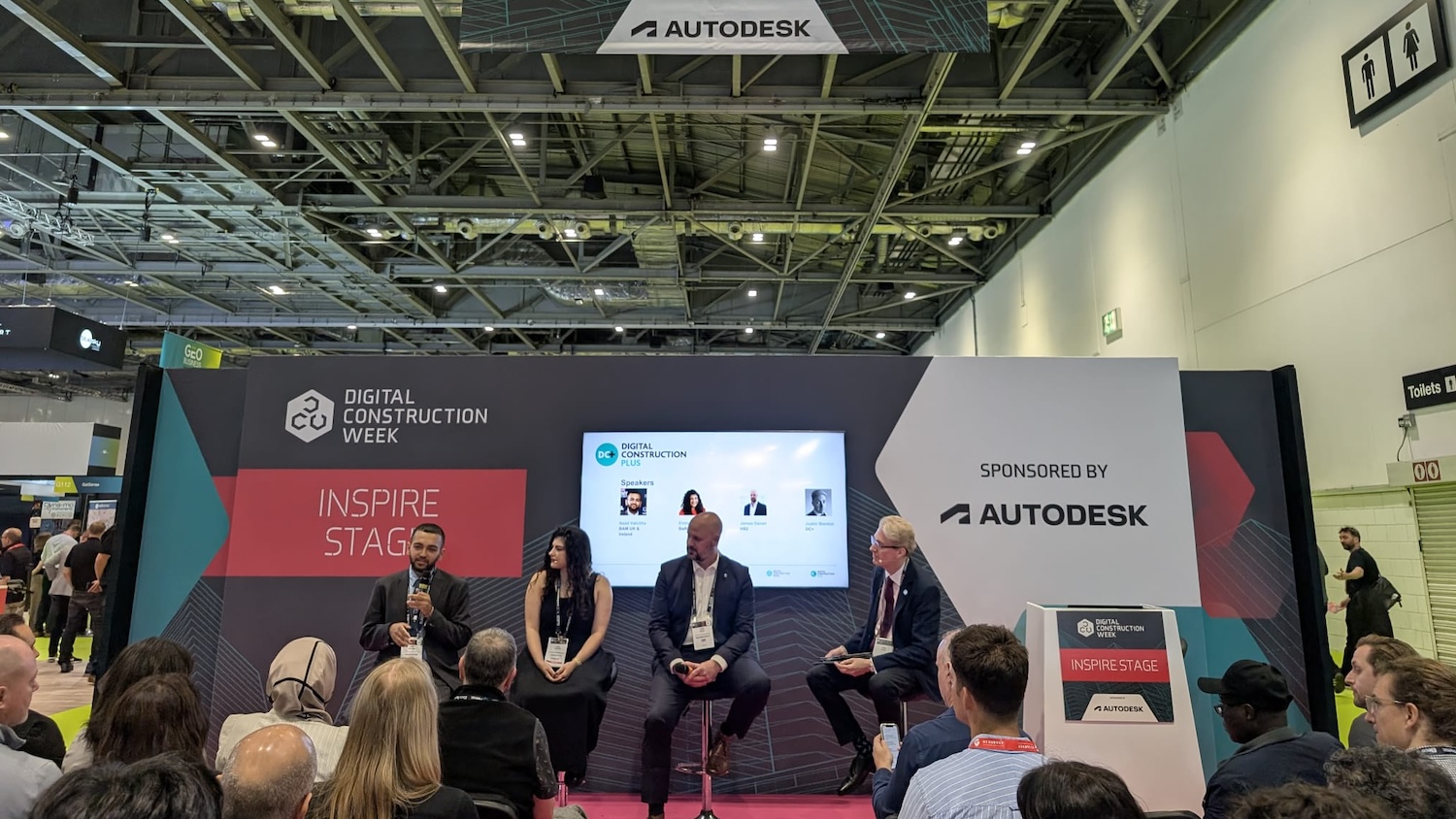
At Digital Construction Week (DCW) three months ago, MIH founder Alex Small announced that the venture had secured support from UK Research and Innovation (UKRI) – as part of the Industrialising and Digitalising Construction Research and Innovation Challenge – to deliver a POC by 31 August.
That was achieved on time and to UKRI’s satisfaction. In a press statement, UKRI challenge director: growth mission, Melissa Zanocco OBE, said: “The key to making better decisions is the right people having the right information at the right time. Manufacturing data is the first step in the data journey, and it is therefore vital that it is reliable and accessible when required.
“It is positive to see manufacturers coming together to solve this issue. At a time of major change in the world of construction products, particularly when it comes to demonstrating the safety and sustainability criteria of products, this will help manufacturers meet the challenge in a joined-up, interoperable way.”
The POC process included outlining how to connect manufacturer databases via a standard API, the requirements for a standard data dictionary to validate and present information, and how the system would reduce complexity and risk.
Speaking exclusively to DC+, Small delves further into the process. “The main thing for us to get across was something demonstrable to UKRI, walking them through what had actually been built in terms of the MIH Portal, and explaining how that functionality would work. But the really critical bit in any POC is identifying where the areas of complexity lie, and what we have done to overcome them, therefore removing a lot of the risk in the further development of the platform.”
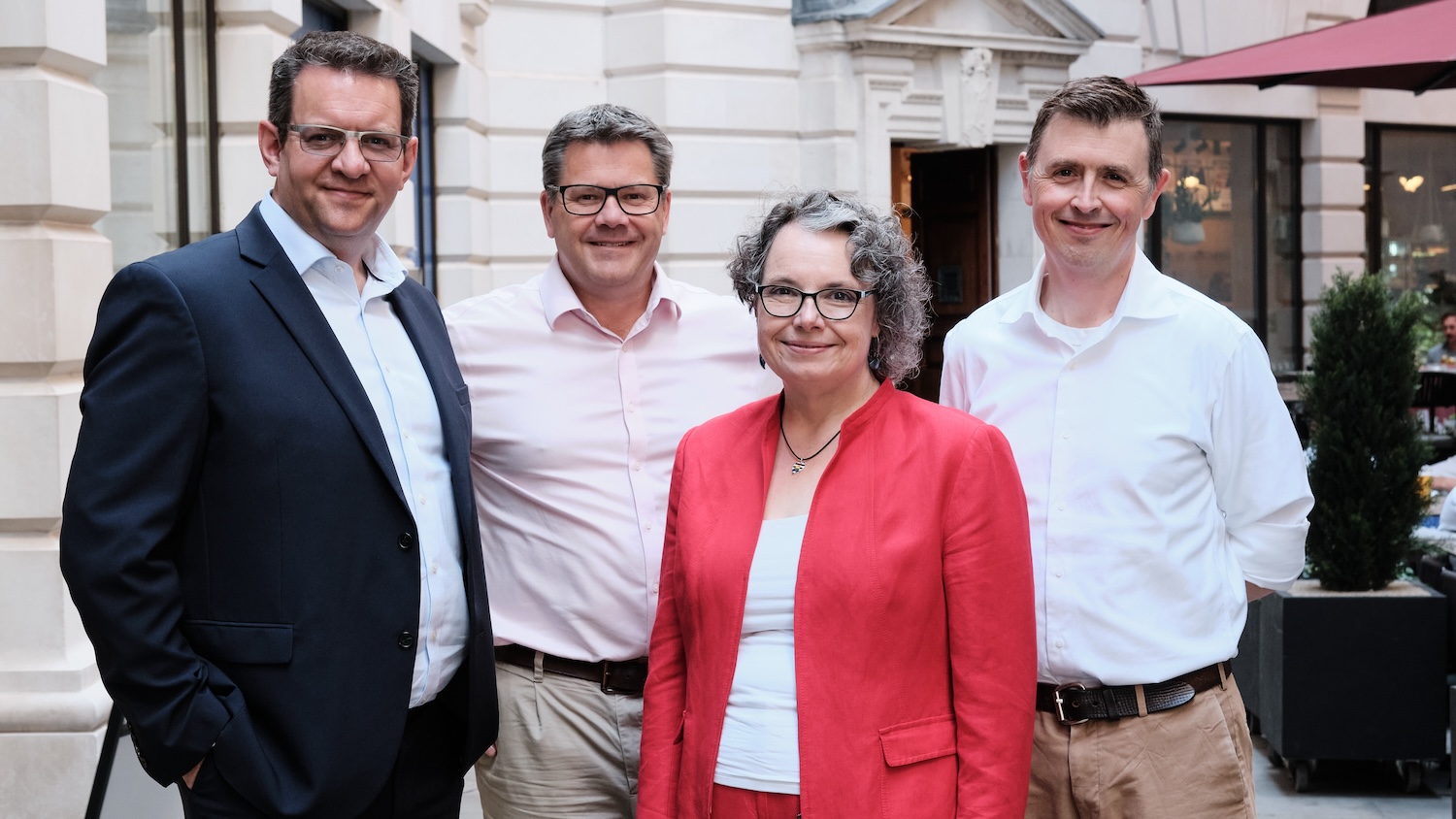
Since DCW, the MIH has formalised the team with Small as project lead, Paul French (former head of digital construction at Saint-Gobain Interior Solutions) as engagement lead, Digital Construction Champion 2023 Su Butcher as communications lead and Chris Evett as technical lead.
Evett is a technical analyst and project manager from outside the built environment, with a background in ontologies and information management. He provides some more detail on the POC process: “The USP of the MIH portal is its ‘canonical templating’ system, which translates manufacturer data into a single, standardised format so products can be easily searched and compared. If a manufacturer already has a PIM system or other platform that holds product data, they can map, or link, their data structure to that of the MIH portal. If they don’t already have a data platform, they can download the data properties and start the process themselves. Over the next few months, we will be working to ensure that this process is manageable and clear for all manufacturers.
“Second, because manufacturers are submitting their data, we have high-quality, consistently formatted product data stored in a cache that can be searched. The POC demonstrated those two concepts, and outlined the roadmap to pilot and trial their application. We have another level of planning to increase the depth and range of our datasets, increase our examples, and start to get it into the hands of some manufacturers to test.”
Evett notes a key irony about the MIH: “We almost have the opposite challenge to a lot of data science projects starting, in that we have a lot of data and we have a lot of potential users – often when starting a data science project, you have to find your user first, and then you have to find a defined dataset. So the MIH is really refreshing in that way.”
Small adds: “We’ve got people chomping at the bit to do pilot and demonstrator projects in multiple countries – we’ve got an industry waiting for a platform rather than the platform waiting for an industry.”
French steps in: “We’re looking to do a series of demonstrators to really illustrate and bring to life the benefit of the manufacturer information portal. We’re at the early stages, and we’re looking for some use cases to test: for example, linking to a manufacturer’s information management system at one end of the portal, so information flows into the portal, and then working with perhaps a main contractor or a software tool to pull the data through for whatever purpose they’re using it for.”
He highlights some other possible use case scenarios for demonstrators: “Multiple product manufacturers into one construction project – so we can see multiple manufacturers pulling through into a single strand, going to a main contractor, for example. Another use case scenario would be using a design software that requires manufacturers’ product information to define or decide upon which design approach is optimal for that project challenge.”
Small adds: “There are two very large construction product manufacturers that desperately want to do a demonstrator involving digital product passports; and there’s a main contractor that really wants to do something involving tagging and tracking of products. These are real-life problems that we’re aiming to solve.”
Subject to funding, a working prototype should be ready by next spring. And that raises the funding question. The completion of the POC means the end of the UKRI-funded phase for the MIH. Small notes: “We are talking to various potential funding partners, not just in the UK, but in Ireland and the European Commission. This is a pan-European project and our funding needs to be pan-European, so that’s what our focus is.”
The MIH won’t seek development funding from manufacturers to avoid accusations of favouritism. Small states: “I think it would be the death knell for the hub if we start trying to get money from some manufacturers and not others.”
The MIH is running fortnightly welcome forums. “They’re basically an introduction, a discussion and Q&A. The purpose is to get everybody up to speed as to what we’re doing, what it is that we’re building, what we’re not building, what the organisation is, and what makes it different,” explains Butcher. “One of the follow-up questions that comes out of that is, do you want to participate?”
Participation, at this stage, is on individual not a corporate basis. She explains why: “This massively lowers the barrier to entry for SMEs. It also means that if you work for a large company, you don’t need permission from your boss to find out more. The only requirement to join to become a participant is you need to sign a basic two-page code of conduct. Getting involved in a pilot project is at company level. Manufacturers and trade associations join as members and become part-owners of the MIH. If you’re not a manufacturer or trade association, you join as a partner.”
Having achieved its first level of success in delivering the POC, what will ultimate success look like? Small answers: “We’ll know this is successful when the likes of Kier can use this on a project and they’re not having to stop continuously because product information isn’t available – it’s just being pulled through seamlessly.”
Butcher adds: “The real success of it will be when it works so simply that it’s a complete no-brainer, and people actually forget it exists at all. That would be the absolute success because people are using this sort of technology in lots of different aspects of their life and they don’t even know it’s there.”
Small concludes: “When you’re on Trivago and Expedia, you’re not thinking, ‘Thank goodness for Amadeus, that global distribution system in the middle’. It just works.”
Keep up to date with DC+: sign up for the midweek newsletter.