


Reducing the work around the work
3 November 2026

RICS is enabling its members to put its professional standard for the use of AI into practice with the launch of a so-called ‘judgement layer’.

Last year, RICS became the first major built environment institution to embed AI use into its professional standards.
The standard sets out mandatory requirements and best practice expectations for RICS members and regulated firms worldwide. It addresses the integration of AI across valuation, construction, infrastructure and land services, and aims to ensure these tools are used ethically, transparently and with professional oversight. The standard came into effect in March.
Now RICS has launched the surveyor’s judgement layer: a practical framework that helps surveyors to distinguish AI-assisted work from professional advice and decide when and how to rely on it. In brief, the layer is there to effectively ask the surveyor and the AI tool to show their working out, as well as the result, and for the surveyor to test the result. This latter point is aligned with the RICS AI standard’s requirement for professional scepticism.
The launch document states: “[An AI] system can produce an articulate conclusion that appears well-supported, even when the reasoning or evidence behind it is incomplete. This risk not only applies to the final output; it can emerge during the AI-assisted process itself – in the sources retrieved, assumptions carried forward, checks performed or intermediate steps taken.
“Focusing only on the conclusion can therefore obscure weaknesses in the process that led to the output. When an AI system is used, the sources, data and method behind the conclusion are not enough on their own. A useful working record also shows how the surveyor engaged with the whole process:
RICS defines a “properly kept working record” as including an audit trail of the AI-assisted workflow, showing both the basis of the work and how professional judgement was applied. “It preserves the sources, data, assumptions, prompts, checks and intermediate steps as they occurred, together with the points at which the surveyor questioned, accepted, changed, revisited or rejected them. The surveyor can then return to the record as it stood at the time, rather than relying on later recollection,” the launch document states.
RICS recognises the difference between using a chatbot and an AI agent, as the graphic below illustrates.
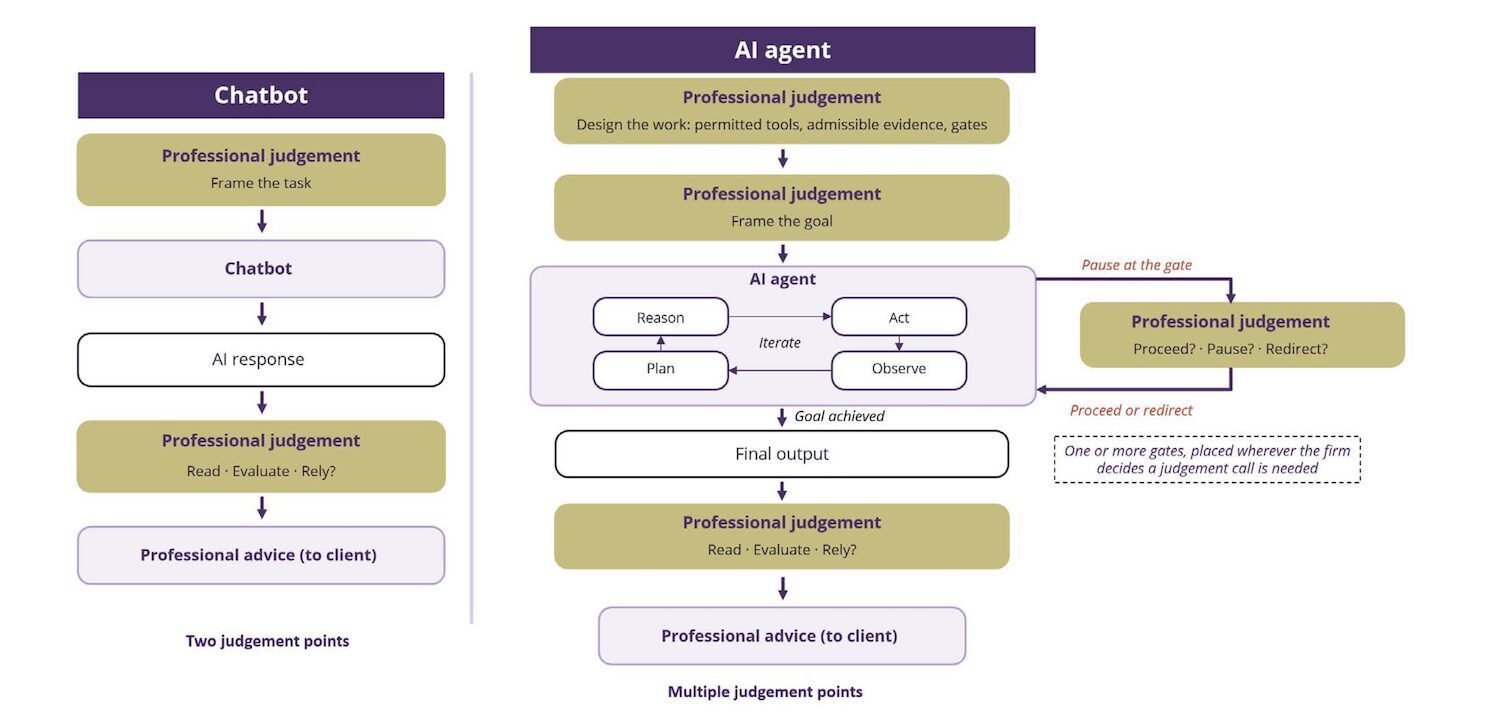
By making judgements transparent, RICS says “the judgement layer makes it possible to understand and review a professional decision later”. This is helpful when a surveyor leaves a business, allowing a client, insurer, regulator or colleague to understand, when needed, how the advice was reached. It also benefits an individual surveyor who develops professional capability through repeated use.
RICS also notes the necessity for junior surveyors to see more than the finished AI-generated answer: “They need supervised opportunities to take part in the work that shapes it, including:
The launch document features several warnings that should be heeded, for example: “The challenge is no longer whether AI can produce information quickly and at scale. The task for the profession is to ensure that professional judgement continues to be exercised, evidenced and relied upon when AI-produced information contributes to professional advice.”
Keep up to date with DC+: sign up for the midweek newsletter.