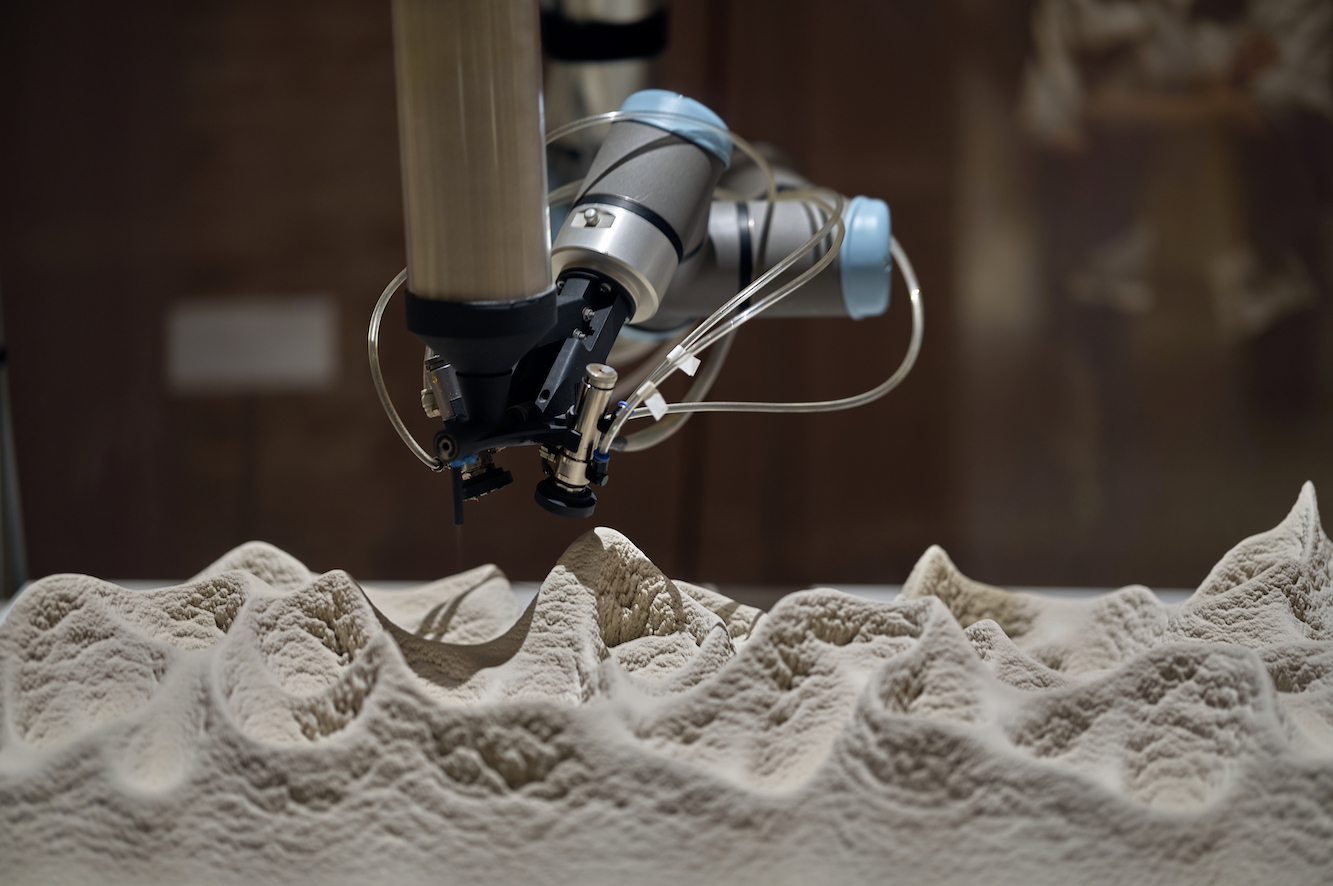


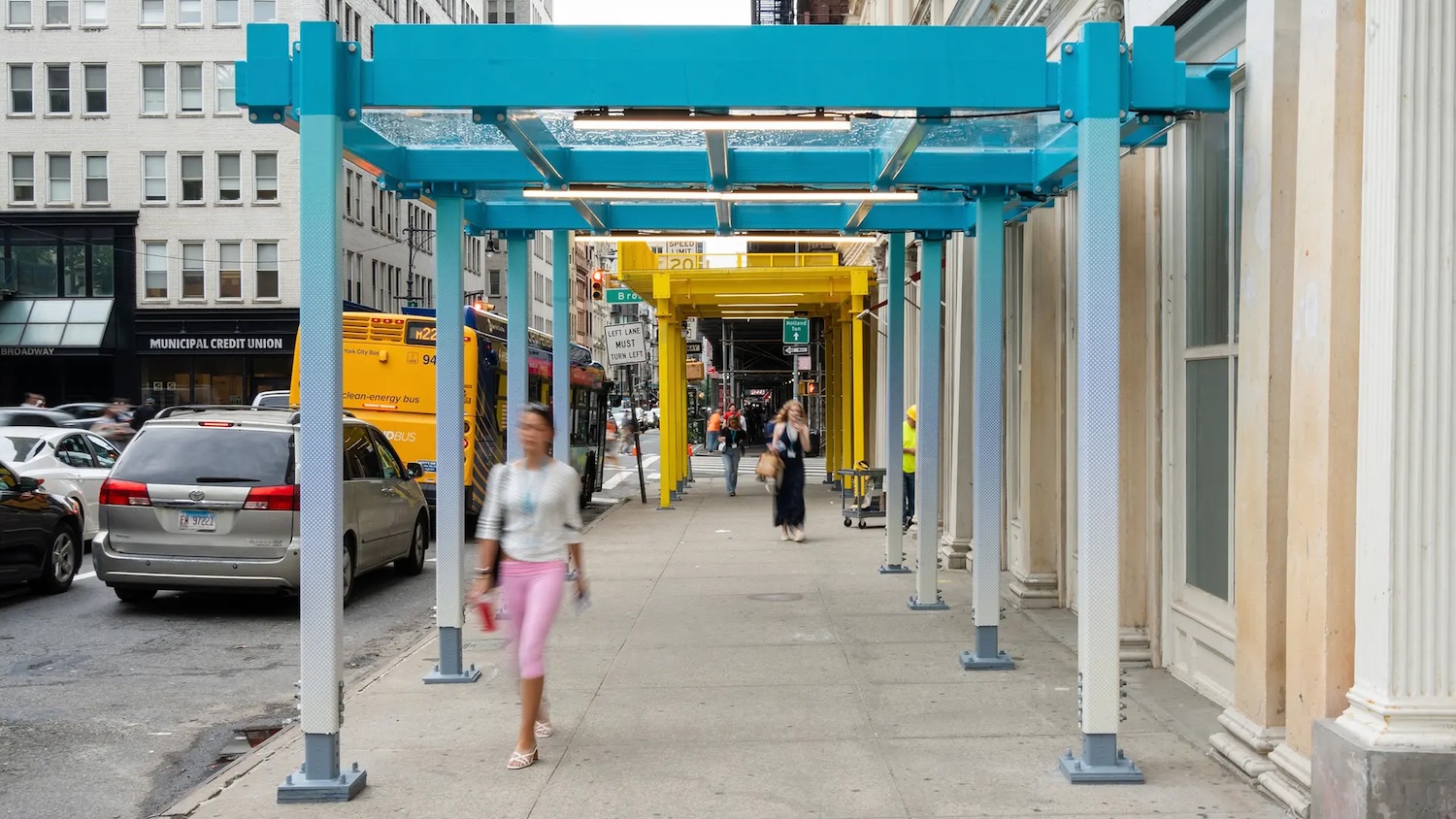
Arup’s scaffolding, giant Lego and DeWalt’s data centre robot make TIME’s top innovations list
21 October 2026

Disappointed by the results that AI delivers to your prompts? If so, it’s time to improve your prompt-writing skills. That was one of the key messages at the recent Women in BIM (WIB) conference.
Having spoken about the token cost of AI prompts at last year’s WIB conference, Ryder Architecture’s Andrew Johnson teamed up with Gary Barley, technical director – digital at Pascall + Watson Architects, and took this year’s audience (packed into the Regent Street Cinema in London) through a prompt skills bootcamp.
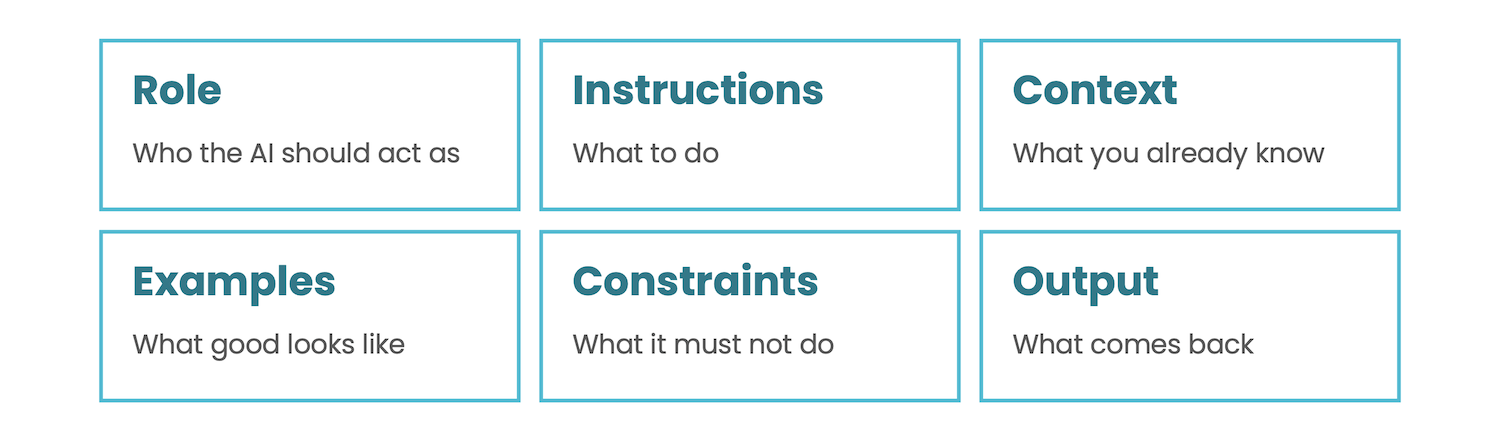
Johnson noted that one-shot prompts consume tokens, produce too much text and waste both money and energy. To maximise both the efficiency and the quality of output from a prompt, he advised the audience to focus on the RICECO prompt principle.
RICECO stands for:
Johnson warned the audience: “A good brief [prompt] gets you a good draft. It does not get you a good answer. It doesn’t matter which large language model you use, the output can look confident, but you’ve always got to to be the human in the loop and check the output.”
Barley noted that those uncomfortable using the RICECO principle can understand it better by asking an AI tool to reverse engineer the prompt that delivered an example output.
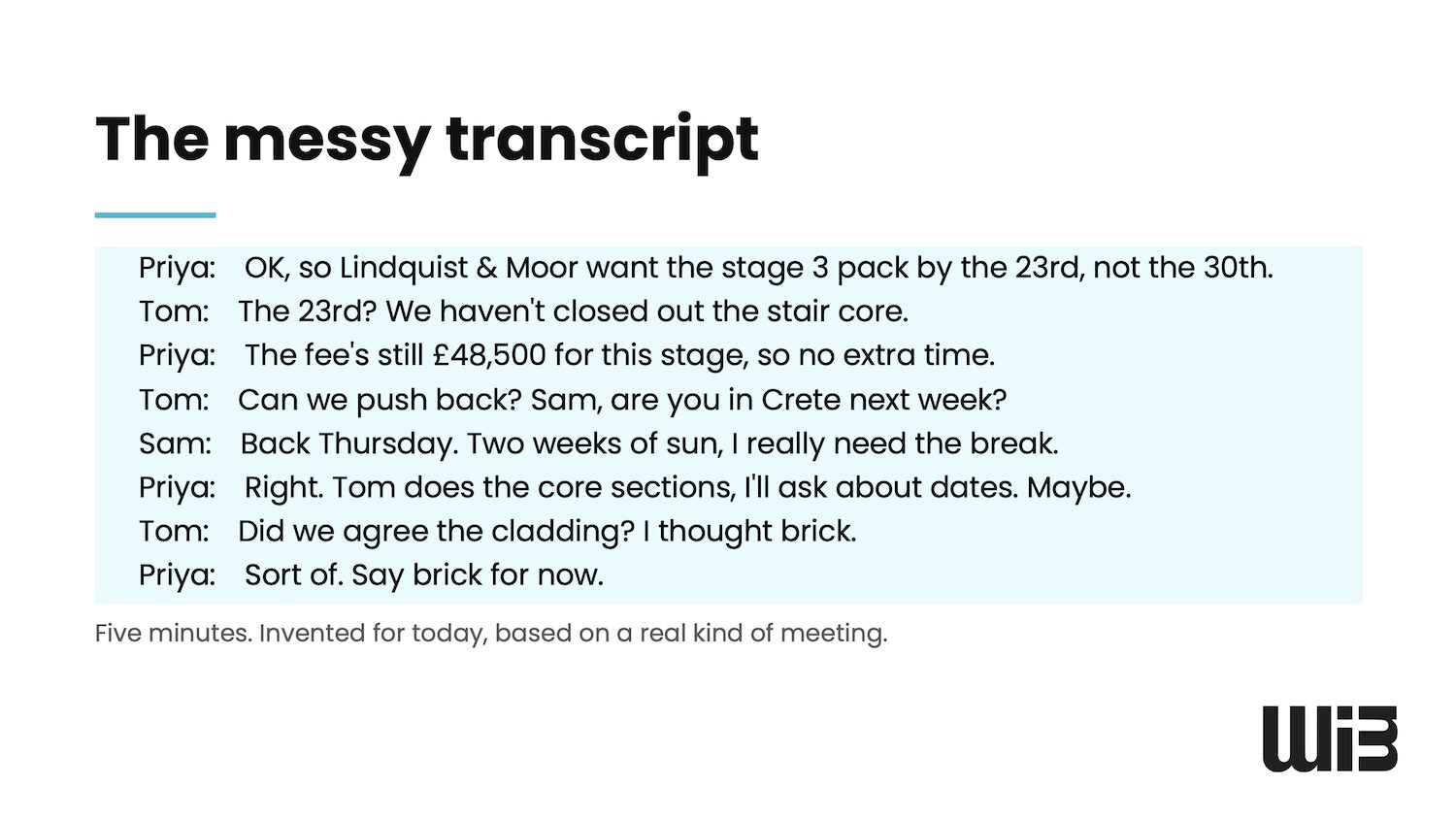
He then took the audience through an example of using RICECO to generate meeting minutes. First, he presented a messy transcript of a discussion about client requirements:
Then, Barley provided the RICECO prompt:
And this was the result:
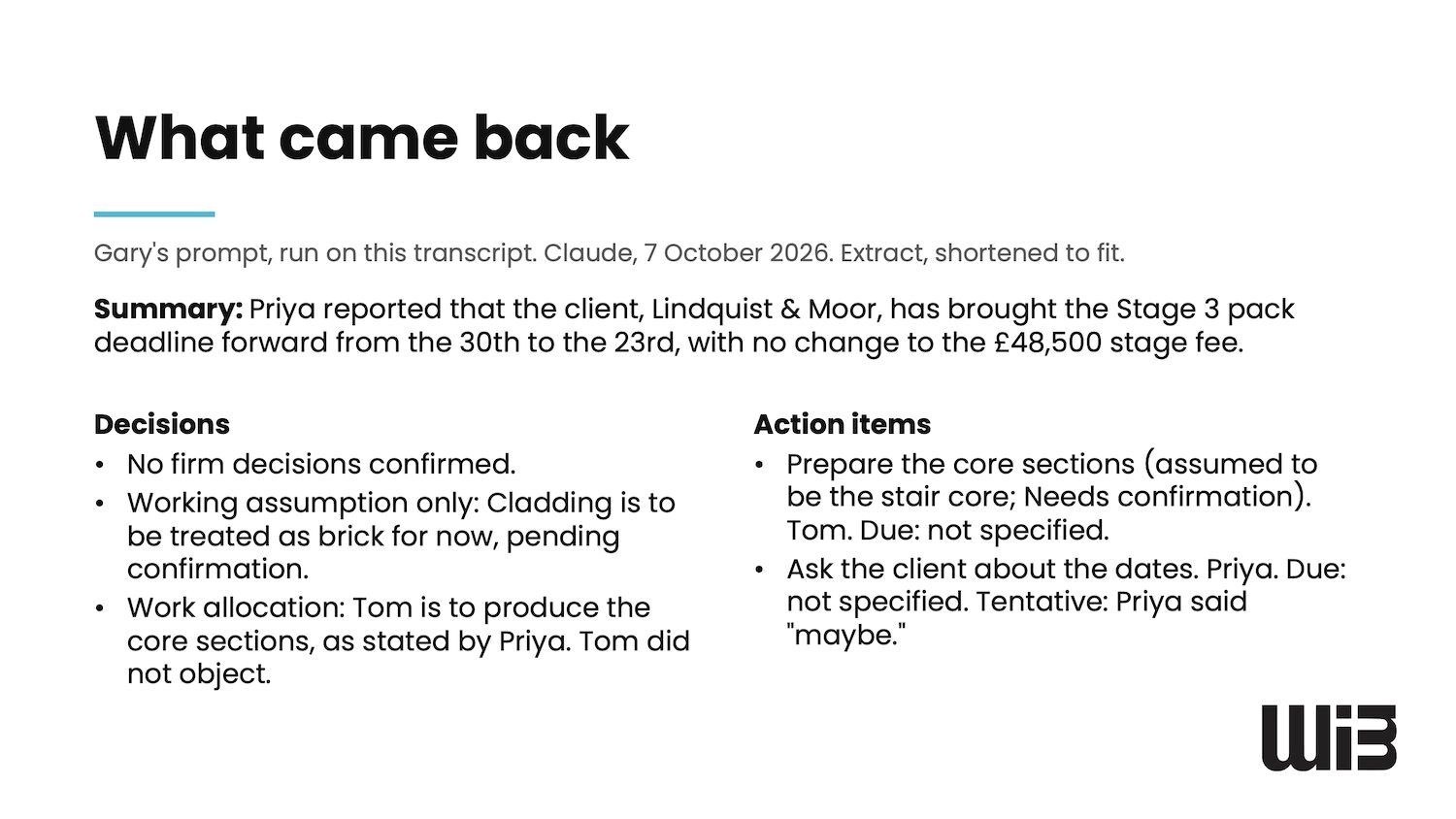
Barley noted: “I think sometimes it’s important for the LLM to know that it can tell you that it doesn’t know the answer or that things are unclear.”
Johnson advised that it is best to write the prompt before opening the AI tool, while Barley suggested that it is best to be precise, but not to the extent of over-complicating the prompt.
Keep up to date with DC+: sign up for the midweek newsletter.