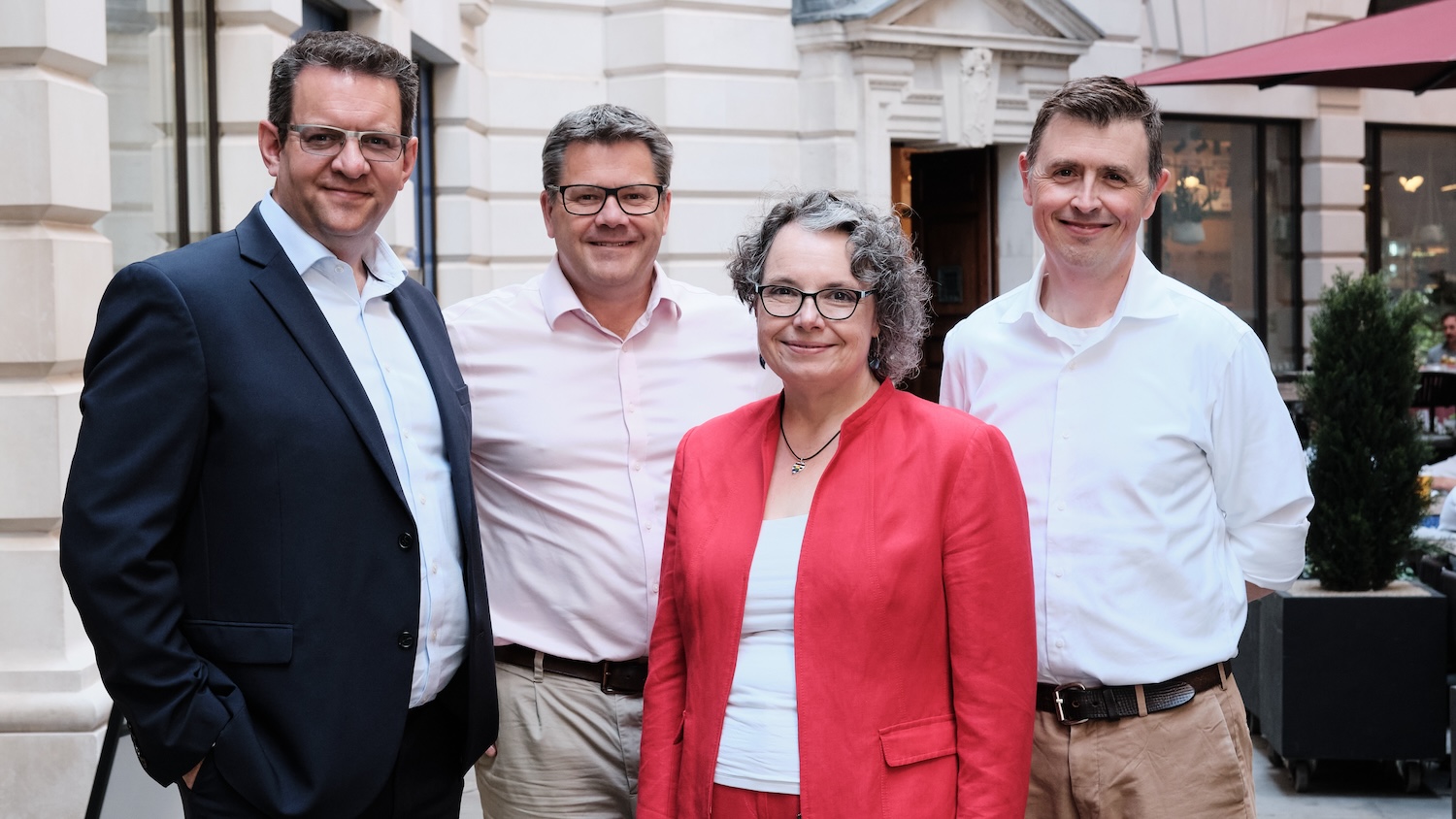



Promptathons: Kier’s key to making the most of Copilot
27 October 2026

Bypassing the IT department’s guardrails may once have been a necessary evil, but now it’s too risky. At the recent Women in BIM (WIB) conference, Ian Gordon, head of data and AI at National Grid, reviewed the tension between IT rules and keen adopters of AI tools.

Gordon has bridged the gap between data and IT for most of his career via stints at the likes of Amey, National Highways and Arup. At last month’s WIB conference, he discussed the tensions between those responsible for data and those responsible for IT in the looming and ever-increasing shadow of AI.
IT departments are more worried than ever about non-IT staff going off piste. Gordon explained: “For a long time, IT departments have, with varying levels of success, claimed the monopoly on the legitimate use of digital technology. One of the most common things you find in an IT department is people muttering about grey IT, shadow IT: ‘It’s so annoying when you folks that don’t work in IT decide to come up with your own ideas and do your own things in ways that aren’t properly governed’.”
He noted that there are two kinds of shadow IT: staff who are unwilling to engage with prescribed new software and continue to use outdated software, and staff who are using new software without permission to do genuinely innovative things.
He added: “One of the signs of a really effective IT department is their ability to channel these kinds of ideas in a productive way. I like to think of desire paths. Do you ever go for a walk in the park, and you’re trying to follow the concrete path, and you can see there’s a shortcut across the grass where people have not followed the correct way, but have got to where they were trying to get to?
“I think shadow IT is a little bit like a desire path in that respect, and a good IT department doesn’t ignore desire paths. They learn how to channel those novel ideas into secure, accessible, agile enterprise solutions. They bring the IT to the problem. They don’t force the problem to conform to IT. [But] there’s a lot of tension in that relationship – and AI is going to turn that tension up to 11.”
“AI has already given us the ability to self-service quality content and insight; [now] it’s giving us the ability to rapidly prototype new ideas, to automate our engagement with our own organisation,” Gordon said. “And I think this is where IT is getting worried, because not only are we lowering the barrier to entry for people to work within the bounds that they’ve already created (Word documents, PowerPoints, etc), but we’re also lowering the barrier to entry for people to step outside of those bounds.
“We’re democratising coding and analysis, and we’re allowing people to delegate their agency to entities that literally don’t exist in Active Directory [the IT department’s database of a company’s licensed software, hardware and users]. In IT, if it doesn’t exist in Active Directory, you don’t exist.”
He observed that the industry has operated for a long time knowing “everyone has their own slightly different version of truth based on their spreadsheets, but at least we were aware that we had different spreadsheets”. But when staff go off piste and develop their own AI agents, it means that “my truth is increasingly different from yours, because the documentation that my agent has access to is tied to my account; the documentation that your agent has access to is in your account, and we are going to increasingly see competing versions of reality”.
Gordon offered advice, first for IT departments: “The opportunity for IT is to use AI not as an additional silo, not as a way of creating these bubbles of reality for individual people, but to create a highway to trusted, quality, canonical information. It’s what data people like me have been talking about for decades. But it’s ever more important, because if we can’t create those single sources of truth that people can rely on, we will increasingly be blind to the fact that they even exist.”
He then turned to non-IT staff: “You probably think that IT are a bit of a pain in the ass. Let’s be honest, we are sometimes. [But] it’s in your interest to work with IT to not use AI as a reason to skip the things that IT are good at, which is scalability, control, security and accessibility. It doesn’t matter how good your agent is: if it gets hacked, or if your bespoke app can’t be read by half the population, that’s going to be a problem.
“And it’s definitely not an excuse to abandon what is a fundamental principle of BIM: the control of trusted information. It’s actually a reason to redouble on that. What’s possible through AI is always going to be underpinned by that control of information.”
Keep up to date with DC+: sign up for the midweek newsletter.