



Two weeks left to enter the digital construction Oscars
21 October 2026

Arup’s rethink of scaffolding, Renco’s giant Lego for construction and DeWalt’s data centre construction robot are among the 300 innovations to make TIME magazine’s Best Inventions of 2026 list.

Every year TIME publishes a list of the inventions its staff think make “the world better, smarter and more fun”.
Among the built environment inventions to make the list were Arup’s decorative scaffolding systems Flex Shed and Rigid Shed, which were approved by New York City authorities this year. They are “relatively conventional in construction procedure, but take up very little sidewalk surface”, according to the magazine. “They also lack the light- and facade-obstructing cross bracing of conventional builds, so pedestrians don’t feel hidden from street life. And the Flex Shed’s platform height and column placement can be easily tailored to exist in harmony with street signs, bus stop shelters and trees.”
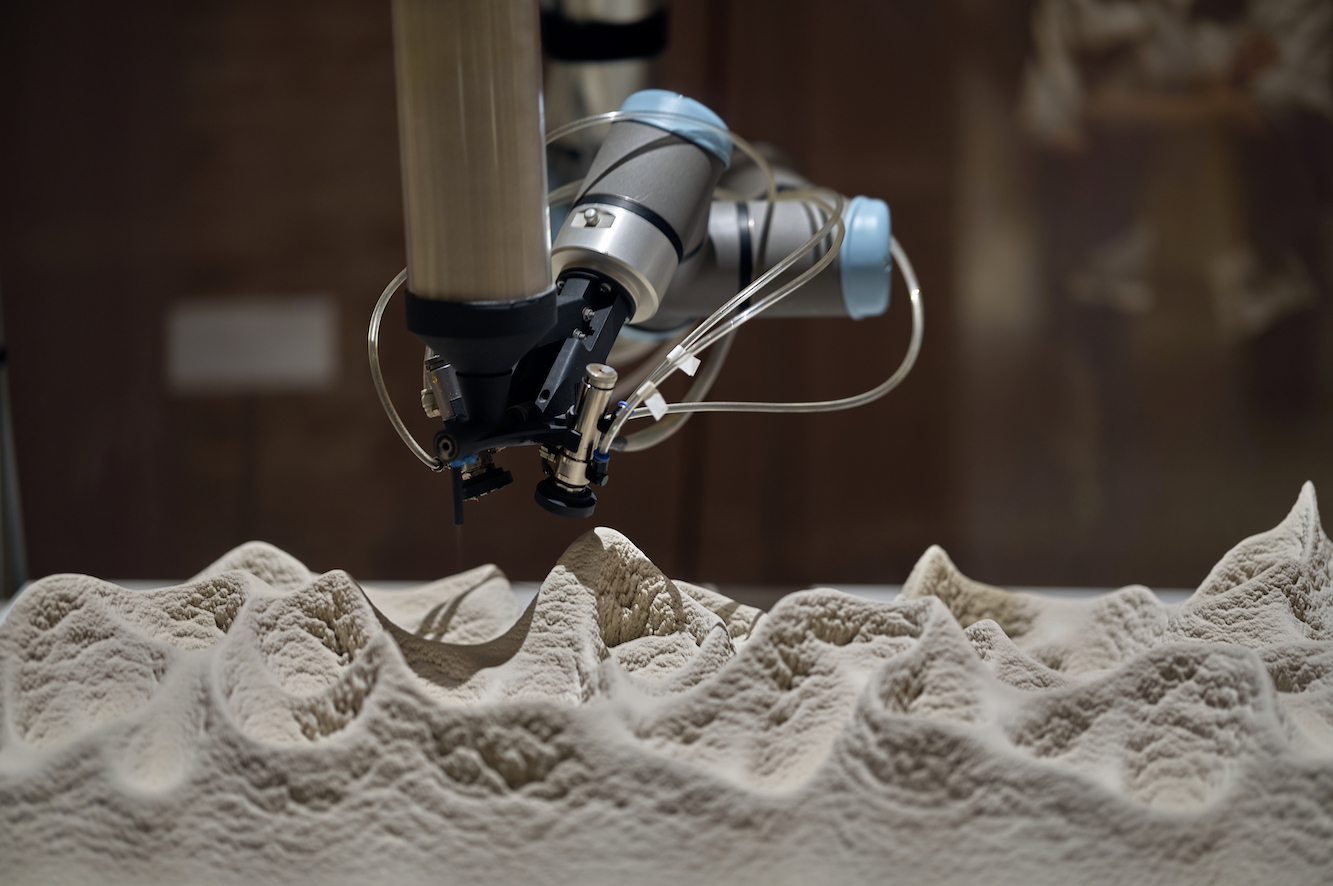
Renco’s giant Lego-style block construction system uses mineral-composite parts that interlock. TIME noted: “An unskilled crew can raise a structural shell in weeks instead of months, and the finished building resists fire, mould and Category 5 hurricane winds.
“Approved under the International Building Code, Renco positions itself as the first new structural building system since the invention of reinforced concrete more than a century ago. The company says its first US development, an apartment complex in Palm Springs, Florida, was built with only 11 unskilled workers in eight weeks.”
The Downward Autonomous Laser-drilling Equipment (DALE) robot from August Robotics and DeWalt is an autonomous downward drill that speeds up MEP installation. It can quickly bore thousands of perfectly centred, straight holes into concrete floors, without human involvement, required for anchor bolts to keep heavy server racks upright in data centres.
As summers get hotter for longer, those working on site may be interested in the Mexar Vapor, a piece of wearable tech that reduces core body temperature. Vapor sits next to the skin on the shoulders and torso underneath clothes and protective gear, and blows down the back and across the chest.
Those looking to develop their own apps or software may want to consider the Lovable app. The Swedish company launched its no-code builder as a mobile app, with an intuitive interface that lets users describe a software or web-based app idea in conversational English, and watch it come to fruition.
The Ubicquia smart streelight also made the list. TIME noted: “Ubicquia CEO Ian Aaron says the device has already been deployed in cities like Los Angeles, where it has been used by the Department of Transportation to manage traffic, and on the campus of the University of Montana, where maintenance staff are using it to identify clustered power outages.”
In a rare case, a building has made TIME’s list. The University of Oxford’s Life and Mind Building brings traditionally siloed biology and psychology departments together under one roof. It was designed by NBBJ.
The building sets new standards for sustainability in research labs, which often use more energy than hospitals. The 25,0000 sq m building uses Passivhaus principles of sustainable construction, and features triple glazing, photovoltaic panels, and air-source heat pumps to make the building 40% more efficient than required.
Meanwhile, those looking to optimise themselves may want to invest in the CogniFit digital cognitive twin. According to TIME, the AI model uses short cognitive exercises to establish a baseline of a person’s cognitive abilities, from memory to processing speed, then evolves as they complete more tests and feed it optional data from connected wearables.
As it learns the brain’s patterns, the app generates recommendations for the optimal time to work, make big decisions, cook for the week, and more. The system is in beta with plans for a public rollout later this year.
Keep up to date with DC+: sign up for the midweek newsletter.