


Neurospiciness: at home in construction
23 March 2026

You need underwear for your AI investment to avoid exposing yourself like the emperor in the classic folktale, argues Paul Mullett. What form should the underwear take?
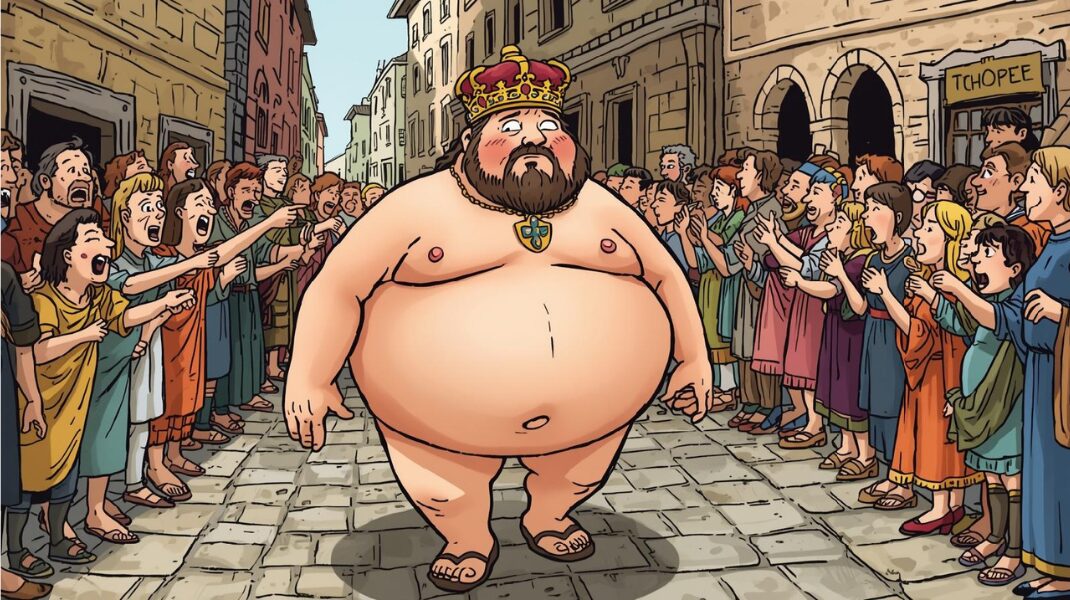
The Emperor’s New Clothes is a traditional folktale made popular by Hans Christian Anderson, telling the story of a gullible and foolish emperor who is conned into spending his money on clothes that are “invisible to those who are either stupid or ignorant”. The emperor’s advisers are too scared to confront him with the truth – that there are no clothes – and so he confidently parades through the streets to show off his new ‘outfit’.
The emperor’s obvious nakedness is ultimately called out by a child, and leads the townspeople to laugh at his foolishness. The story ends with the emperor embarrassed by his stupidity and clearly wishing he had bought some real clothes.
From what I have seen, there are quite a few emperors (and empresses) currently being measured up for a brand new suit.
Now, in other news, what is going on with AI?
I follow multiple technology industry experts and influencers and – honestly speaking – I’m still none the wiser on what the future holds. Artificial general intelligence has been predicted for decades and is still elusive. The unveiling of the new Boston Dynamics’ Atlas robot at the CES show was unsettling. Large language models are definitely not sentient, but are good enough to make a swathe of human tasks redundant. The list continues to grow, but the benchmarks and expectations seem to shift.
The expanding mythos is that AI will fundamentally upturn society and the industry, and yet most of us are still waiting while financial markets keep building in anticipation.
Among the polarising and dramatising nonsense, I know a few things are true:
I’m not anti-AI. I think it will have an unprecedented impact on society (just ask any copywriters or graphic designers) and will have a critical role to play in the future of our industry. Aecom also seems to think so with its recent acquisition of Consigli – a move that, regardless of your view, sends a clear signal of the direction of travel. We are seeing the closure of the gap between the AEC industry and the technology industry. It’s a gap that will continue to shrink, but the shape of what will remain is unclear.
But the overriding truth is that without solid, well-structured data foundations, AI is unscalable and promised ROIs will not be achievable. I hear this repeatedly from very knowledgeable AI leaders, and it makes complete sense to me. You can fund the building of minimum viable products and pump millions into running trials, but if you haven’t also invested in getting your data organised and making it accessible to your platforms and algorithms, then you will have no gas for your engine. You will go nowhere.
Microsoft, Autodesk, McKinsey: they all say the same thing.
And yet businesses are ignoring this advice. Like toddlers refusing to eat their vegetables, they are told it is good for them, but they would rather the quick rush of chicken nuggets and candy. While it tastes great in the short-term, it won’t sustain you.
Businesses, and their leaders, are not children who don’t know any better than to eat candy. The logic is clear to see for those who spend more than five minutes looking. It makes good, sustainable business sense to build strong foundations to serve long-term objectives.
Instead, we see corporations racing to the bottom, driven by short-term KPIs and unreasonable shareholder expectations that AI can help to magically ‘leapfrog’ the competition (who are also doing exactly the same). It’s an impatience that permeates decision-making, destroys any tangible digital culture and ultimately pushes businesses back, not forwards. Why?
Perhaps ‘normal’ digital is no longer sufficiently exciting or attention-grabbing. Maybe it’s not something that gets impressions on LinkedIn. Too old hat?
Or is it that there’s a self-destructive cycle of industry FOMO around AI?
Patience used to be a virtue, but it has now been trumped by visibility. A need to be seen to be doing new and exciting things. An ambition to be perceived as a leader in AI, rather than actually being one.
In the world of AI, ‘fast-fashion’ seems to rule.
Which brings me, obviously(!), to the topic of underwear. The ultimate, invisible insurance policy.
Underwear is, mostly, boring and practical (and yes, I am aware of the exceptions). It serves a multitude of practical functions – to provide comfort, protection, shape and hygiene. Just ask Bridget Jones.
It also provides a vital role in protecting our modesty in both real and hypothetical scenarios. It’s why many of us were told to wear your ‘best’ underwear whenever we left the house. Just in case you had an accident and ended up in hospital, or you had to get undressed unexpectedly… these things do happen!
Remarkably (for this article), the analogy holds true for AI adoption. If, like the emperor, you are considering spending a fortune on your brand new, expensive, trendy clothes, then you should make sure you have some good underwear to match… just in case.
So, what does underwear for AI look like?
Well, apart from the underwear that looks great (ahem) but is uncomfortable, like all good underwear it should:
So, underwear for AI means investing for the long-term, utilising scalable and adaptable technology solutions, building foundational infrastructure and data architecture and focusing on people and culture, developing strategies that develop an underlying AI-readiness.
It provides digital comfort, protection, shape and hygiene – and could end up protecting your organisation’s modesty.
So, if you are an emperor and are thinking of getting some new clothes, I implore you… please, please wear some underwear. Just in case your new clothes end up being invisible. We don’t want to see you exposed.