



Have your say on the direction of the nima conference
18 September 2026

Contractors are increasingly using AI in responses to tenders. Indeed, more than three-quarters of the 100-plus contractors polled for the latest Procurement Trends survey from Rider Levett Bucknall (RLB) said they are using it.

More than two-thirds (68%) of the contractors who responded to RLB’s survey said they are using AI for support in writing qualitative responses to tenders. A further 8% of respondents use AI to generate first drafts.
The more detailed and quantitative the work, the less likely contractors are to use AI. For example, a total of 43% use AI in some way to identify risks in tender documents, while just 21% are using it for programme optimisation. Only 13% are using AI for pricing and subcontractor evaluation.
Paul Beeston, RLB partner and head of industry and service insight, offered this advice to those overseeing procurement: “The mainstream use of AI in tender responses suggests procurement teams should now assume that some bid content may be machine-assisted, particularly in qualitative answers. That does not make the content inherently weaker, but it does increase the importance of designing tender questions that test project-specific understanding, delivery capability and evidence rather than generic narrative.
“In practical terms, procurement decisions should place more weight on proof points, examples and interview or clarification stages where bidders can demonstrate how their written responses connect to the actual team, methodology and risks of the project. As AI use expands, evaluation needs to focus less on polish alone and more on credibility, relevance and verifiable substance.”
Furthermore, Beeston warned: “For clients, greater use of AI creates both an opportunity and a risk in the outcomes they secure. Used well, it may help bidders respond more efficiently and consistently, potentially improving the quality and completeness of submissions. Used poorly, it can widen the gap between what is written in the tender and what the project team can genuinely deliver in practice.
“The result is that client outcomes will depend increasingly on the quality of due diligence applied after responses are received. Where clients test claims properly and probe delivery evidence, they are more likely to secure credible commitments. Where they do not, there is a greater risk of selecting bids that read well, but translate less effectively into delivery performance.”
The survey also addressed how well clients are defining their information requirements. As the chart below shows, contractors reported some growth in well-defined information requirements in tenders compared with the year before. However, there was similar growth in those who reported requirements as poorly defined or, most worryingly, not defined at all.
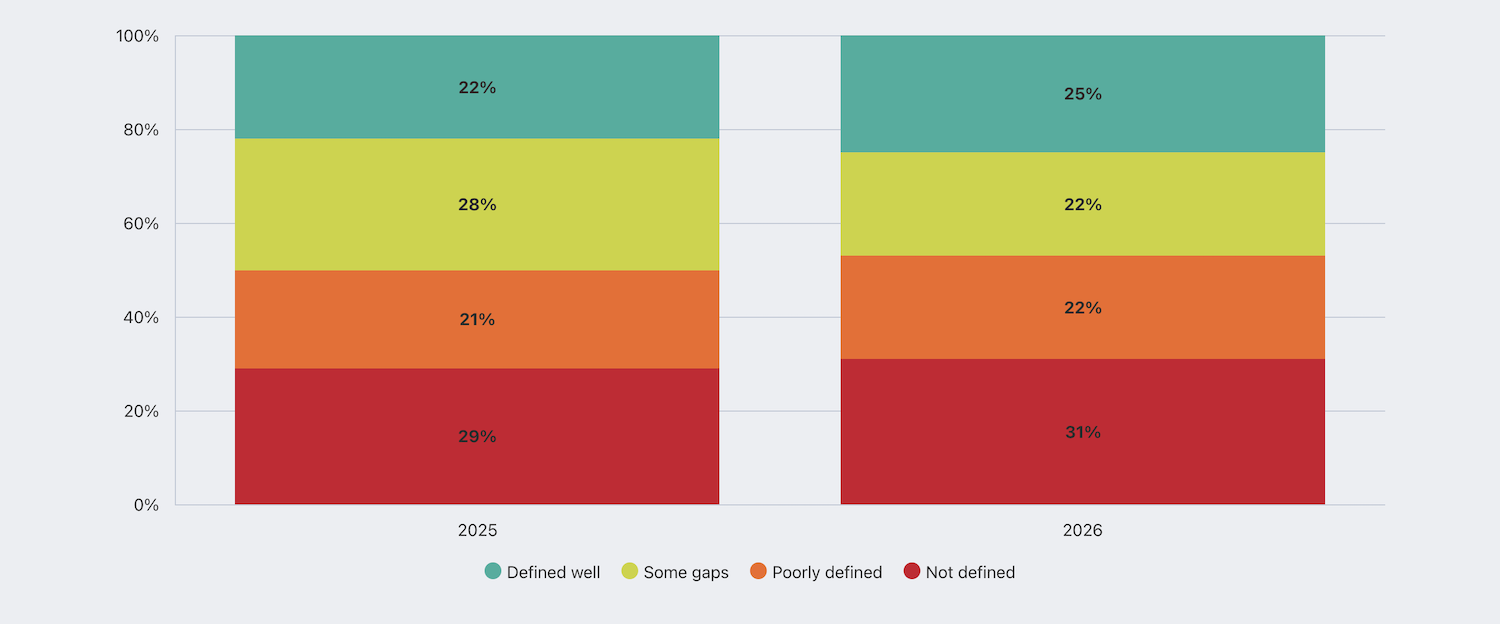
Beeston noted: “Where information requirements are poorly defined, contractors are pricing uncertainty and are likely to place too little discipline on the data clients actually need. In practice, this means clients should set out information requirements early, define them in a way the market can respond to consistently, and link them clearly to project stages, deliverables and responsibilities. Without that clarity, asset data risks becoming an afterthought rather than a managed output of procurement.”
Keep up to date with DC+: sign up for the midweek newsletter.