


Construction Leadership Council confirms the industry’s digital goals for 2026
26 March 2026

The Environment Agency has deployed AI-enabled smart signs on beaches in West Sussex to answer visitors’ questions about the water.
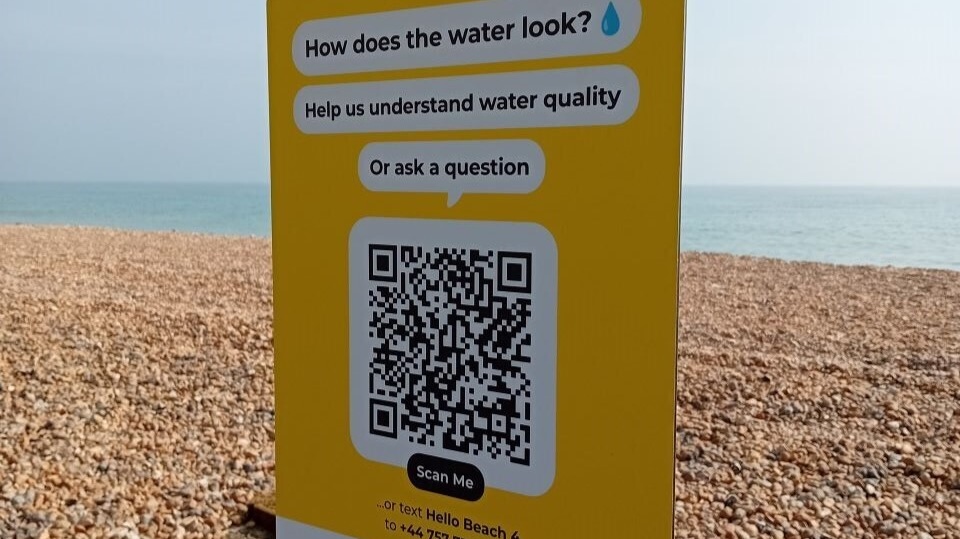
The smart signs have been placed at Goring Beach, Worthing and Worthing Beach House. They feature QR codes that can be scanned with a mobile phone, enabling visitors to ask the AI about bathing water quality and any live issues.
The Hello Lamp Post technology, funded by the Environment Agency, will also ask visitors about beach conditions, such as how many people are in the water or whether there is much seaweed present. This conversation builds a picture of site activity outside of the typical bathing water season and identifies issues that could be harming water quality, such as seagull or dog excrement.
Visitors will also be asked to report urgent concerns to the Environment Agency’s 24/7 incident hotline for follow-up. They can also upload photos to the AI to show their concerns or any positive updates from the beaches. Photos are moderated to remove anything that could identify a person.
Cat Fuller, Environment Agency area director for Solent and South Downs, said: “Normally, signs only give quick guidance and direction – these are another level. They give verified facts you can trust and pick up real-life information from those who use the beaches. This means we can fix simple issues more quickly and investigate more challenging problems thoroughly. Local knowledge married to monitoring expertise is a win-win for our waters.”
Water-specific smart signage can be found on the River Dart in Devon, Rivers Teme and Severn in the West Midlands, the River Nidd in Yorkshire, Edisford Bridge in Lancashire and Windermere in Cumbria. Smart signs are coming soon to Ravensbourne in London.
[Headline courtesy of Simon & Garfunkel – ed.]
Keep up to date with DC+: sign up for the midweek newsletter.