
Graphisoft’s 2026 updates pave the way for more AI workflows
12 October 2026

Technology should support people rather than overwhelm them, says Egnyte AEC practice lead, EMEA, Pavlina Nikolova, in the countdown to Digital Construction Week (DCW).
Pavlina Nikolova: My role at Egnyte focuses on supporting customer growth across the region and helping organisations apply technology in ways that genuinely improve how people work.
I’ve spent several years working in construction technology and innovation, collaborating with professionals across the entire project lifecycle, from planning and design through to construction and maintenance. What’s always stood out to me is that people in this industry manage enormous amounts of information every day, often across multiple teams, systems, and locations. That creates a lot of friction and unnecessary manual work.
At Egnyte, we work with design, engineering and construction organisations to simplify that environment. We help teams bring project information together into a single, secure platform so people can collaborate more effectively, find information faster, and spend less time dealing with file management issues.
I’m particularly interested in making sure technology supports people rather than overwhelms them. There’s a lot of excitement around AI at the moment, but for me the real value comes when it solves practical day-to-day problems and helps experienced professionals work more efficiently.
We’re focusing on how Egnyte is helping built environment organisations use AI and intelligent content management in practical ways that address real operational challenges.
One of the biggest issues across the sector is fragmented project information. Teams are dealing with huge CAD and Revit files, specification documents, compliance requirements, emails and project records spread across different systems and storage locations. On large projects, that often leads to duplicated work, delays and difficulty finding the right information when it’s needed.
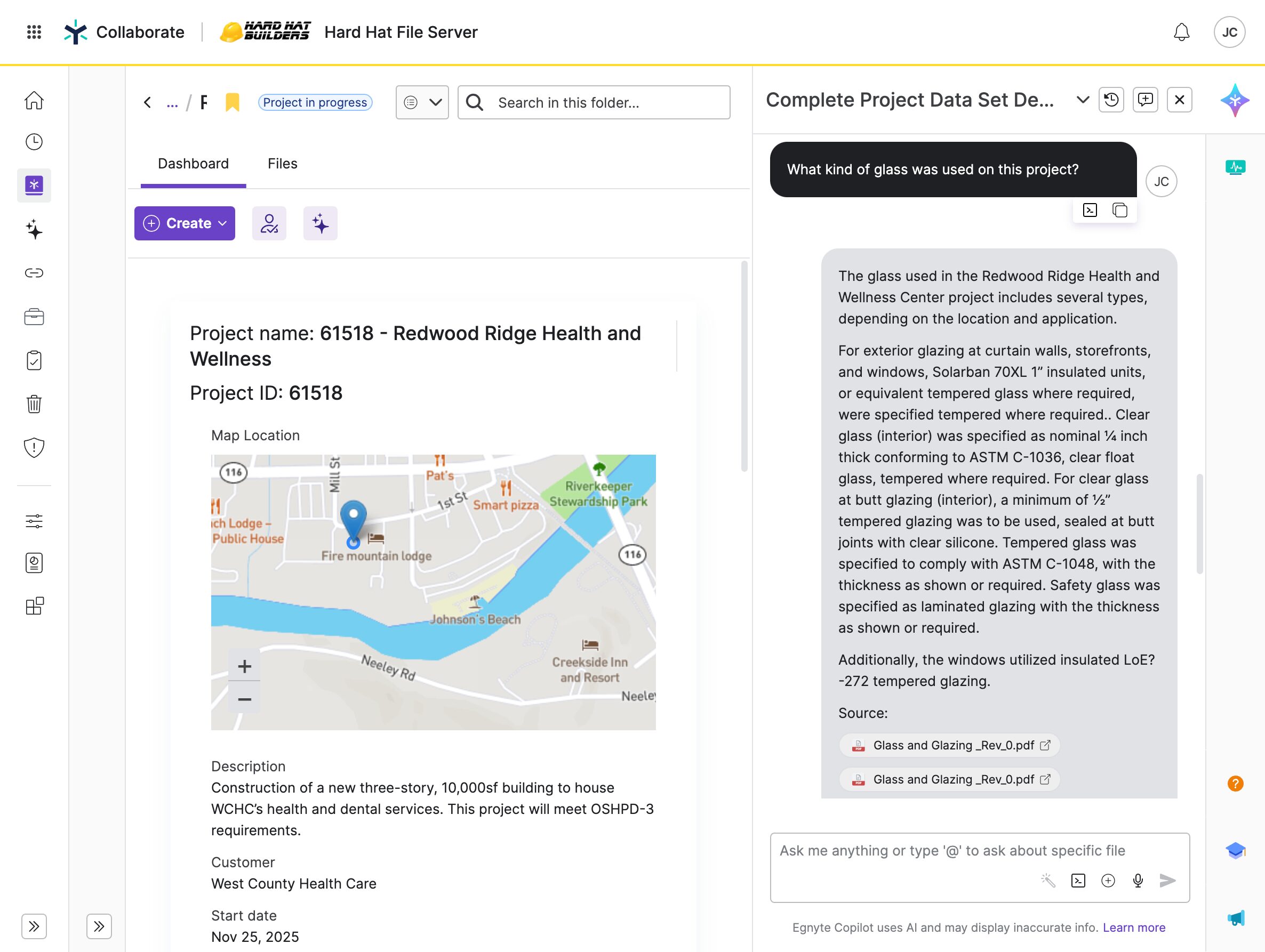
We’re showcasing our AI agents for design, engineering and construction teams, alongside our Smart Cache technology.
The AI agents are designed to automate some of the industry’s most time-consuming technical tasks. For example, our Specifications Analyst can extract submittal requirements from large specification documents in minutes rather than hours of manual review. We’re also demonstrating our Building Code Analyst, which helps teams identify relevant regulatory requirements much earlier in the design phase.
What’s important is that these tools fit into existing workflows rather than forcing organisations to completely change the way they work. The aim is to reduce repetitive administrative effort so teams can focus more on project delivery and decision-making.
We’re also highlighting Smart Cache, which solves another common challenge in the industry: slow performance when teams are collaborating remotely on very large design files. Smart Cache enables distributed teams to work with multi-gigabyte files at local network speeds, which removes much of the lag and delay people typically experience when working across offices or regions.
Ultimately, the goal is straightforward. We want to help organisations reduce data sprawl, improve collaboration and make better use of the knowledge already within their project information.
Egnyte is already trusted by more than 23,000 customers globally, including many organisations across the built environment sector.
The feedback we consistently receive is that centralising project data into a single environment has an immediate impact on productivity and collaboration. Teams spend less time searching for information, resolving version conflicts, or managing disconnected storage systems. That becomes especially valuable on complex projects involving multiple stakeholders and external partners.
In the age of AI, a centralised environment is also critical to establishing a knowledge base to ensure that AI results are delivering accurate outputs based on the most comprehensive and up-to-date data.
We’ve also seen strong results from organisations using Smart Cache to support distributed project teams. For companies working with large Revit and CAD files across different locations, the improvement in file access and collaboration speed has removed a major source of frustration and delay.
With the AI capabilities, early adoption has been very practical and results-driven. Customers are using the tools to reduce manual review work around specifications and compliance checks, helping teams get to relevant information faster and avoid repetitive tasks that traditionally consume a significant amount of project time.
Rather than replacing expertise, the technology is helping experienced professionals work more efficiently and make better use of the knowledge already contained within their project data.
D632.
Keep up to date with DC+: sign up for the midweek newsletter.