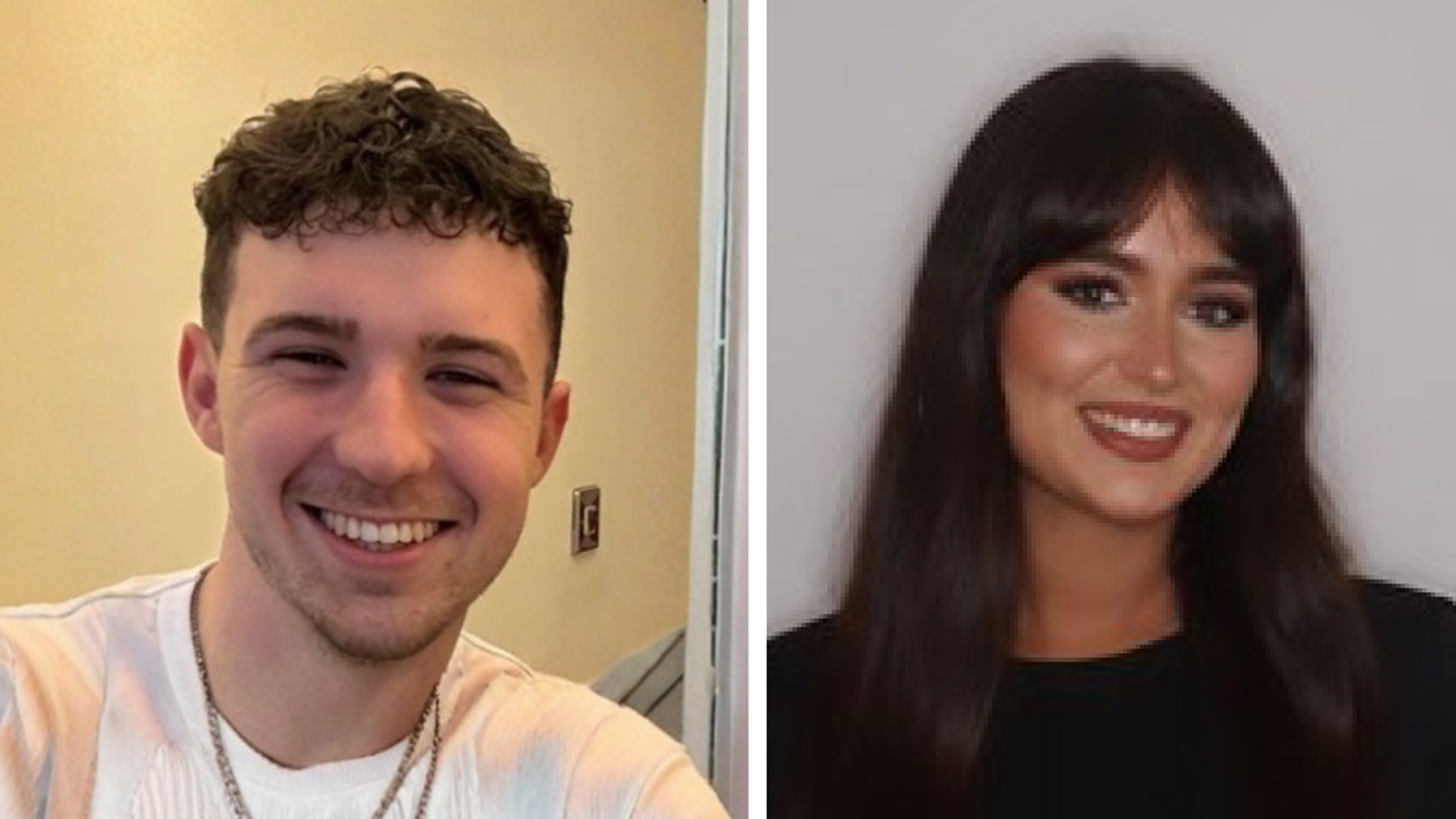


Apprentices on parade: Chloe Tebb and Frankie Gibbs of Laing O’Rourke
13 February 2026

To mark International Women’s Day yesterday (Sunday 8 March), Francesca Lofiego and Dolapo Folorunso reveal how their Women in BIM (WIB) mentor/mentee relationship works and its benefits.

Francesca Lofiego and Dolapo Folorunso were paired under the WIB mentorship scheme last summer. Lofiego is digital lead at Structure Tone London, a position she’s held for 18 months. She has experience in both the construction and architectural environments.
She joined WIB just before the covid pandemic. She tells DC+: “WIB has really been a boost for my career, because I’ve joined so many conference panels as a speaker or moderator, and given some presentations as well. It’s been great to meet so many other people – and women in particular – in the industry, who were facing, and sometimes still face, the same kind of frustrations and issues. It’s good to have a safe environment where we can share our feelings, we can share our experience and learn from each other.”
Folorunso is building information lead at the Department for Work and Pensions. Prior to that, she worked for Willmott Dixon for five years as a digital construction manager, having joined as a management trainee.
With their mentor/mentee relationship concluded, DC+ got the pair together to find out more.
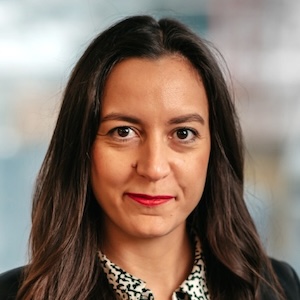
“I was a mentee more than six years ago, and after my great experience as a mentee, I thought ‘I can probably help someone else’. What I learned during my mentee period has been very useful for my mentor period.”
Francesca Lofiego: I was a mentee more than six years ago, and after my great experience as a mentee, I thought, I can probably help someone else, so I applied to be a mentor. I’ve mentored three women and had amazing experiences with all of them.
I think that what I learned during my mentee period has been very useful for my mentor period as well. When I started my career, I finished university, and I started with an architectural practice, helping people using Revit. And to be honest, I was helping people in Revit who had more experience than me, because I only had my university experience. So I was quite anxious, because sometimes people who knew more than me would call with questions, but I managed to always find the answer.
I always remember my mentor’s advice: they told me not to worry, that there is always a solution: “If you don’t know the solution straight away, just take your time, find the solution and then give the answer.” That really helped me.
Dolapo Folorunso: I came across WIB via LinkedIn. I had benefited from mentorship at Willmott Dixon: there was so much value in having someone who had gone ahead of me – they were a fountain of knowledge that I could draw from.
The pandemic put a stop to my learning, and I found that I still had knowledge gaps. Like Francesca said, working with people who know more than you can cause anxieties and imposter syndrome, so I thought being mentored would still be of value to me. It would help me to fill my knowledge gaps and also help me to get a clearer direction of the industry and where it’s going.
DF: We met every four weeks. I would usually start by sharing my challenges, frustrations or burning questions. We would have an open discussion, with both of us bouncing ideas off each other, and Francesca would give me her insights. She would often go away with my questions and come back at the next session with answers.
FL: I always ask my mentees to come to the first session with the goals that they want to achieve, so that we can work out a plan together to make sure that by the end of the mentor scheme, those goals are achieved.

“While looking for a new role, I had the courage to start up my own initiative called Dolapo in BIM, where I’m helping students and sharing my BIM knowledge.”
DF: A big goal of mine was met very early in our mentorship. During my first session, I came to Francesca and said: ‘I don’t know where I’m going in my career.’ I wasn’t sure what role within digital construction suited me.
Francesca suggested a mind-mapping exercise, where she asked me about what I enjoyed and what I didn’t enjoy, and what my challenges were. It sounds simple, but it was effective in that it really helped me understand my ways of working. She suggested a few roles that might be suited to me. That really helped me in my job search.
One of the things she identified was that I enjoy teaching and suggested that perhaps I could be a lecturer. While looking for a new role, I had the courage to start up my own initiative called Dolapo in BIM, where I’m helping students and sharing my BIM knowledge.
That really helped me gain confidence. Shortly after that, I landed this role, which I’m so happy to be in. I’m helping to stand BIM up and break down some of the misconceptions, which aligns with what Francesca said about me and teaching.
DF: I had a launch event towards the end of last year where I reached out to a few students I had come across or who had seen me on LinkedIn or just naturally through work or word of mouth. It was an open event where we got to network and have an open discussion about the built environment, the different roles within BIM, what BIM is, and so on. It was a small event, but a good turnout for my first event. It’s something that I want to build up.
A few days ago, one of the attendees told me they had landed their first interview for a role they want within digital construction. I’m really pleased. I’ve scheduled a call with them, hoping to share some of what I’ve learned and acquired from Francesca, to help them with their interview process.
It’s gone full circle. I think in this industry it’s all about knowledge sharing, passing on information. That’s how we grow and prepare for the future.
FL: I love what Dolapo’s done with her Instagram page. I hope she will continue her journey on Instagram: nowadays, that’s how people communicate. It can be very effective, especially for young people or young women approaching the industry for the first time. It will be great for Dolapo to network and raise her profile.
FL: For a mentee, if you are lost in your career, apply for the WIB mentorship scheme, because there will be someone who can help you. But also, if you know where you’re going with your career, still apply: your mentor can offer a different valuable perspective that you may not have considered before.
If you have two-plus years of BIM experience, you can apply to be a mentor. You shouldn’t think “I don’t have enough skills” or “I don’t feel comfortable”: two years of experience is enough to give something back to someone who has just started.
DF: I would encourage anybody seeking mentorship to simply go for it, no matter what stage of their career they are at. It might seem quite scary and daunting at first, but it’s been incredibly beneficial for me: it has changed my life in amazing ways, both professionally and personally. I do think that some of our greatest opportunities lie outside of our comfort zones.
Keep up to date with DC+: sign up for the midweek newsletter.