


Autodesk boosts civils functionality
15 September 2026

Elevator giant Kone has launched a spin-out business to provide an AI-enabled smart building system for high-footfall environments.
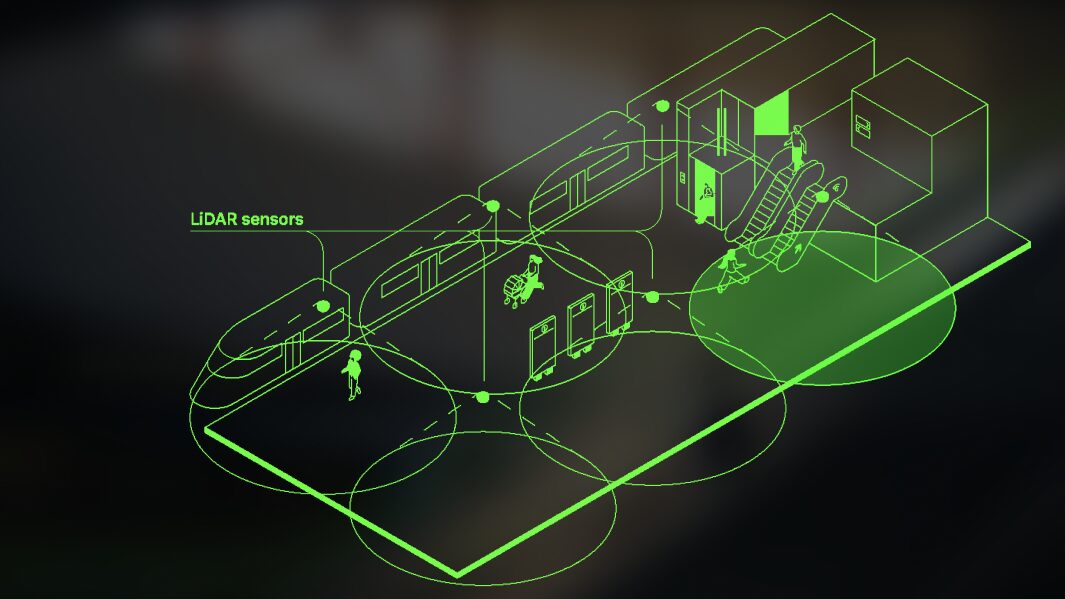
Known as Vaella, the spin-out is focused on helping operators of densely populated, high-footfall environments – such as transport hubs, airports, stadia and large commercial buildings – anticipate and manage disruption, maintain flow and strengthen resilience.
The Vaella platform acts as an AI operator that can help teams shift from reactive monitoring toward real-time situational awareness and predictive operational response, the business claims.
Originally created within the technology and innovation unit at Kone, Vaella “addresses a growing challenge facing cities and infrastructure operators: public environments are becoming more interconnected, more dynamic and more vulnerable to disruption, while the systems used to manage them remain fragmented and reactive”.
At the same time, safety and security threats continue to rise, and facility operators are being asked to do more with fewer onsite personnel, as public sector resources remain constrained, the business says.
The platform combines sensor data, operational systems and predictive intelligence into a unified real-time operational view designed to support faster decision-making, improve continuity of operations, and help teams manage increasingly complex environments under pressure.
Unlike many conventional systems, which rely on invasive, camera-centric monitoring, Vaella is designed as a privacy-first operational platform that connects the existing infrastructure rather than replacing it, the business claims.
Initial pilots and validation work have already been conducted in real operational environments, including Helsinki and Brussels, where Vaella has tested how real-time situational awareness and predictive operational insights could improve the management of complex public transport hubs. Tested applications included crowd build-up detection, passenger incident response, accessibility disruption management, demand-aware station operations, and adaptive energy management.
“The world’s busiest public environments are becoming exponentially more complex, but most operational systems are still designed to react after problems emerge,” said Fabien Fédy, CEO and co-founder of Vaella. “Vaella was created around a simple idea: if operators can understand what is happening now and what is likely to happen next, they can make faster, better-informed decisions that keep facilities running smoothly and absorb pressure before it becomes a crisis. This enables operators to keep people safe, and make even the most crowded public spaces easier to navigate for millions every day.”
He added: “Transport hubs and metro stations, for example, can experience sudden surges in passenger volumes following concerts, sporting events or service disruptions, creating safety risks in busy transit areas. According to one pilot customer, overcrowding contributes to nearly 30% of operational incidents.
“By identifying congestion patterns in real-time, operators can respond earlier, increase train frequency, redirect passenger flows, or adjust escalator directions before situations worsen. Real-time occupancy insights can also help optimise lighting, ventilation, and other building systems dynamically, with some pilot environments identifying potential energy savings of up to 20%”
Ulla Tikkanen, CCO and co-founder at Vaella, added: “Facility operators are not short of data. The challenge is that it’s scattered across too many systems and still requires people to interpret what matters in real time. Vaella isn’t replacing these people; it’s levelling up every aspect of the existing operational team’s capabilities by turning fragmented information into intelligence.
“Consider it like having an additional equivalent of your best facility manager, your most experienced security supervisor, your smartest energy analyst and your most reliable accessibility coordinator, and having all of them working together, in real time, around the clock, on every floor and in every corridor of your facility at once.”
Keep up to date with DC+: sign up for the midweek newsletter.