

Digitising site deliveries saves BW time, avoiding £50k of compliance costs
1 April 2026

With more than 2,000 people across 500 organisations inputting data into a CDE storing more than 100,000 documents, British Land’s £4bn regeneration of Canada Water in south-east London is a significant information management challenge. How did Amodal overcome it?
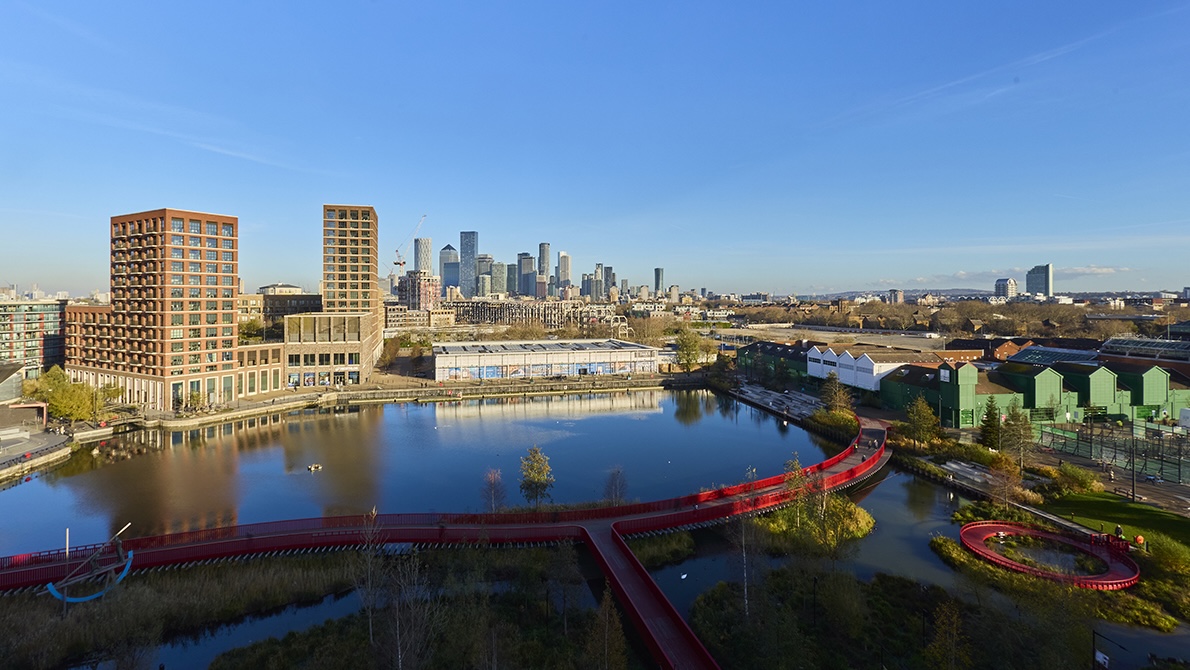
In London’s Docklands, the Canada Water Masterplan is taking shape, marking the transformation of 21ha of Southwark into a vibrant, mixed-use district. It is one of the most ambitious urban redevelopment projects currently underway in the city, delivering around 3,000 new homes, up to 2 million square feet of workspace and a further 1 million square feet of retail, cultural and leisure space.
Designed by Allies and Morrison, the Canada Water Masterplan contains the first new town centre in London for a generation: nearly 5ha of open space, including a 1.4ha park and town square, and 16 new streets (covering 3.8km). The ambitious project is a partnership between British Land, AustralianSuper, Southwark Council and the local community. A decades-long project, work is being delivered in phases, with the first phase being completed this year.
Over the course of the programme, British Land has appointed a broad range of contractors, architects and consultants across different plots – each bringing their own teams, systems and delivery methodologies. At the heart of this lies an enormous information management challenge: more than 2,000 people across 500 organisations are inputting data into British Land’s CDE, which is storing more than 100,000 documents.
Rather than delegate digital handover responsibilities to individual contractors, British Land adopted a masterplan-level strategy to provide consistency across all plots, ensure visibility of interfaces, and deliver long-term value through a single source of truth.
To help manage information flow throughout the project, British Land turned to information management consultancy Amodal.
From day one, Amodal’s role has been to manage data across the entire project ecosystem, ensuring a consistent, structured and compliant approach to information capture, exchange and governance. The goal is for British Land to retain oversight of deliverables, interfaces and progress.
To ensure alignment, Amodal is managing the CDE, structuring it to support both design and construction phases as well as future asset management. The associated documents cover multiple development plots, technical disciplines and stages of delivery.
Amodal has also introduced several tools and systems to support quality assurance and risk management. Point cloud technology is being used to capture surface and underground asset data. Using a combination of drone images and 3D models captured with hand-held scanners, the below-ground 3D model is then aligned to the above-ground site images to create an overview of the site. Working in this way means teams can detect clashes between existing underground utilities, proposed underground services, and other works from the rest of the supply chain. This process also helps to reduce disputes and therefore delays, as well as mitigating future risks and cost exposure.
Thomas Whiting, director and co-founder of Amodal, explains: “There is a lot of information and data available on a project, but it is important to identify that which gives stakeholders the ability to do the right thing at the right time with the right level of information.
“For example, when planning utilities, we don’t need all the detail of the building models. What we do need to know is where the optimum laydown area is to cause minimal disruption, but still make sense logistically, and how to order the works to future-proof the site so that things don’t have to be redone. Using the information available in a selective and thoughtful way, we can view the relevant elements, simplifying the model and helping contractors to make informed decisions backed by reliable data.”
Document governance has also been streamlined to improve version control and simplify access for, and the onboarding of, new stakeholders such as project managers.
The phased nature of the Canada Water regeneration means that digital handovers are not a single event, but a rolling process that must be managed over time.
British Land’s early investment in information management is already paying dividends, with lessons from early phases helping to improve consistency in later ones.
Amodal has structured the CDE and associated workflows to support future technology changes, including the ability to plan and execute system migrations if required. Keir Freestone, project director at British Land, concludes: “Amodal brought a level of clarity we hadn’t seen before on a project of this scale. With multiple contractors and design teams all feeding into the CDE, Amodal’s structured approach meant we always had visibility of progress. It’s made coordination far simpler and given the team real confidence that the information we’re working from is complete and current.”
Keep up to date with DC+: sign up for the midweek newsletter.