


Understanding BAM’s digital approach
10 March 2026

Isabelle Barron and Dr Melanie Robinson both won trophies at the Digital Construction Awards 2025. How do their approaches to their digital construction careers compare?
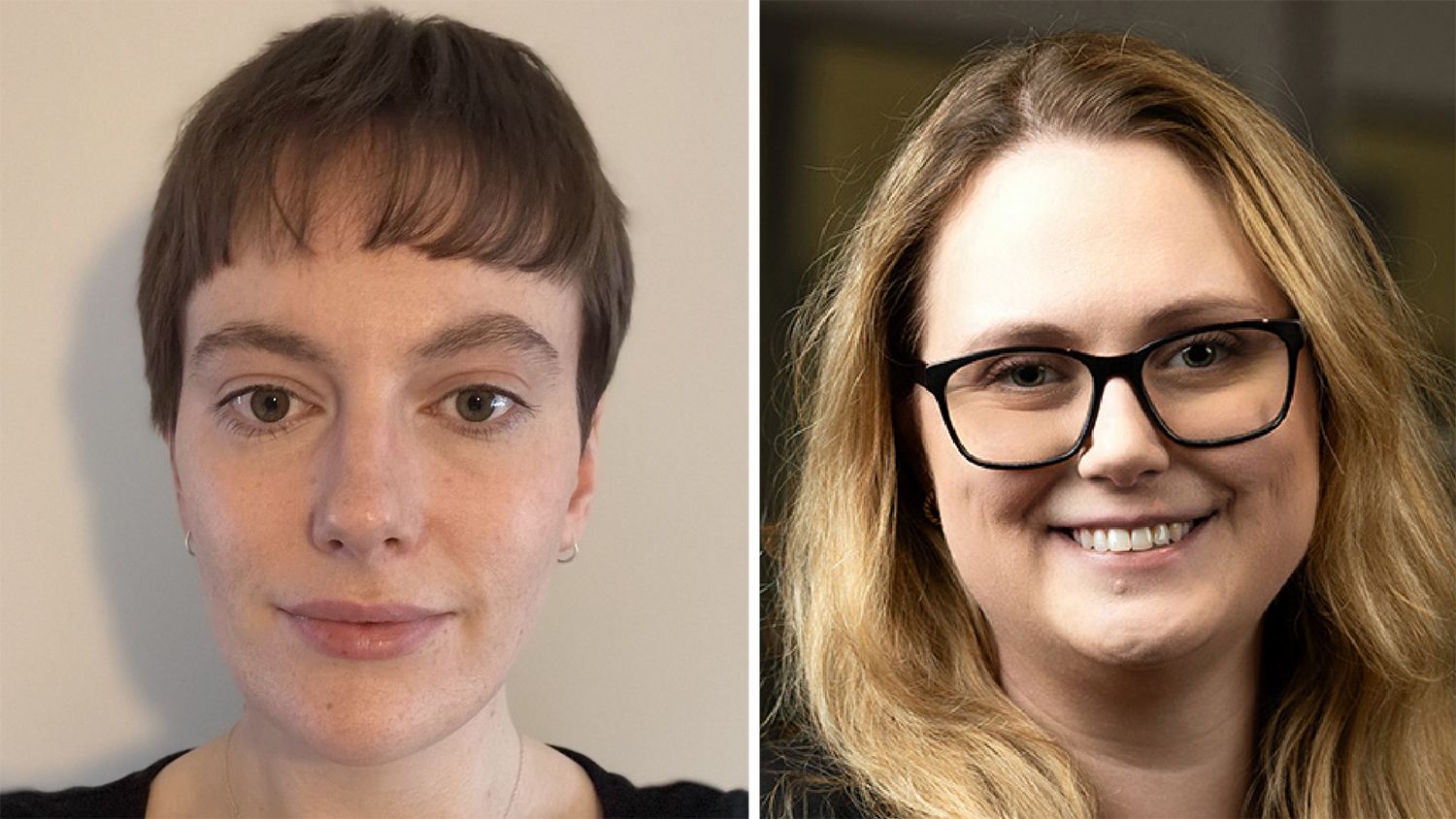
Barron was named Digital Rising Star of the Year, while Robinson was awarded the title of Digital Construction Champion of the Year at this year’s ceremony.
First, let’s introduce Barron. She joined WSP in January 2024 and quickly proved herself to be invaluable. In her role as a digital construction consultant, she has been instrumental in implementing innovative digital solutions across various projects, showcasing her ambition and commitment to information management best practices and demonstrating exceptional proficiency in leveraging digital technology to enhance project outcomes and organisational success.
After a year at WSP, Barron was assigned to lead and manage a small team delivering the digital construction requirements for the new Eden Project.
In addition to her regular duties, she is also a representative for the WSP Professional Growth Network, a voluntary group of early career professionals who aim to connect, develop and provide a voice for others across the business.
“My biggest impact so far would be bringing the design team together, bringing them up to speed with our workflows and using the CDE, making it simple, coordinated and, touch wood, as smooth as possible.”
Barron is no stranger to awards: she has also been training with WorldSkills (the skills Olympics) as part of Team UK in the digital construction category. Having won a gold medal for digital construction in EuroSkills 2023, she secured the Best in the Nation award and a medallion for excellence at WorldSkills 2023.
Turning to Robinson, she is an associate at Okana who specialises in information management and leads the consultancy’s strategic advisory service. In June 2024, Okana was launched as the rebrand of BIM Academy. As part of this, Robinson was tasked with developing a new strategic advisory service – Strategy and Intelligence. She has built the service using digital transformation through change management as the foundation for delivery, promoting the idea that digital innovation is accessible to everyone with the right strategy. She supports a growing team to deliver these ambitions and has built a comprehensive delivery toolkit to support clients of all sizes and digital maturity.
Robinson is a proactive member of the digital community. She is in her third year as a regional lead for Women in BIM, sits on the Building Safety Alliance Special Interest Group for the golden thread, is on the steering group for BIM4Water, and was part of the steering committee for the inaugural Digital Construction North event. As a thought leader, Robinson has spoken at industry events, reaching more than 1,000 audience members since March 2024.
She is keen to support the next generation of built environment professionals: she regularly provides guest lectures for Newcastle University, Northumbria University and Edinburgh Napier University. She also mentors three Okana colleagues and is co-supervising a PhD student with the University of Strathclyde.
DC+ got the pair together and invited them to interview each other.
Barron: One of the things that you’re passionate about is supporting the upskilling of people and the next generation of people. How did you first get involved in that, and how has it developed?
Robinson: It all started when I was doing my undergrad in architectural technology. I was coming through the system just when BIM was being mandated. I graduated in 2015 and the BIM mandate was in 2016, but as an undergraduate, I still wasn’t learning anything to do with Revit, or the wider BIM piece, or digital construction. I was still working on AutoCAD.
Then there was an opportunity to apply for a PhD studentship. It started looking at energy use and the performance gap. The more I got into reading, coupled with the experiences of my undergraduate course, the more I realised that there was a wider issue in industry, particularly around people and skills, and that what industry needed was a lot more complex than what it thought it needed in terms of the skills required.
“I want to look back and say I have had a tangible impact on some of the biggest clients in the world; and I’ve grown a capable team of being able to support me in doing that and then leading their own amazing initiatives with clients.”
And not just software skills or even the more technical skills: it’s absolutely about the soft skills and the cultural aspects as well. And so my PhD morphed into looking at competence and that wider world. And while I was doing my PhD, I got involved with a few research pieces, particularly with the Scottish Futures Trust around competence frameworks.
Working with Okana, there’s a whole ream of things I’ve been involved with, and it’s come full circle, because I’m really involved in a lot of things to do with the Building Safety Act at the moment. Competence is a massive part of that puzzle, as well as upskilling – digital upskilling in particular. Upskilling has always been a constant, regardless of what the topic is or what the skills are. The need to change people’s skills, culture and knowledge and try to improve: that has always been there.
Robinson: What was it like winning the Rising Star award? Did you have an idea it was coming, or was it a complete surprise?
Barron: It was a complete surprise. My boss and the head of our team put me forward for it and didn’t tell me until I’d been nominated. I was really impressed by other nominees’ bios, and I think everyone had come from such different backgrounds and had different journeys leading in to being nominated for the award.
Being nominated alongside Dan (Chesson from Bond Bryan Architects), whom I competed against in WorldSkills, made it an interesting lineup. I was very surprised [to win] and very grateful. It really helped my confidence, knowing that I’m in the right place 18 months after starting in BIM.
Barron: What made you want to stay in this sector after doing your PhD? What keeps you engaged and wanting to develop in this environment rather than branching out into a different part of the industry?
Robinson: Just being part of construction or the wider built environment in itself is an amazing place to be for anyone, whether that’s the digital side or not, because you are literally creating ‘new’. Even if that’s repurposing old, you’re still doing something new. Making that mark on the physical fabric of society is pretty special.
In terms of the digital space, it’s challenging. I know it’s a bit of a cliche that no one day is the same, but no one day is the same and no one project is the same. We often hear about cookie-cutter approaches to things, but I don’t think that can exist in this world, because every client is different, every building is different. Whether it’s the Building Safety Act or sustainability, there’s always something to problem-solve. I want to keep solving problems.
Robinson: You’re new to the built environment – what did you bring to digital construction? What prepared you for this world and what lessons have you learned so far?
Barron: I didn’t really know this world existed at the start. I started out wanting to do a maths degree, but I thought it would be too stressful. But I like buildings and architecture, so I went into architectural technology. I really enjoyed my degree, but I didn’t really enjoy working in practice. It was the WorldSkills competition and learning BIM from watching videos, plus my self-drive that brought me here – the experience of the competition and competing with myself to excel.
The learning I went through for WorldSkills helps me a lot in my current role, because a lot of things I do, I’m doing for the first time. It could be documentation that I’ve not heard of before, or we’re trying to solve problems in software that I’ve not used before. There’s new stuff coming up all the time.
I’m learning all the time, whether from colleagues or from contractors – learning about their side and how that feeds into the design.
Barron: You’ve had a lot of roles outside of your main job – how do you manage it all?
Robinson: It is tricky. Having that self-drive (as you described) and a really strong set of principles is what really helps me manage it. Understanding the ‘why’ is really important. Sometimes, you’re doing a couple of hours after you’re supposed to finish, because you’re catching up after spending a couple of hours on a steering group or doing a presentation. I see that as an investment, not necessarily in myself, but an investment in the community.
I guess it plays into that upskilling passion I have. It’s passing on that knowledge and wanting to curate a good pathway forward for others in the industry: I really enjoy it. It’s extra hours, but doable, because you can see the tangible difference that you’re making.
The advice I would give to those coming in and wanting to get involved is: reach out. A lot of these groups thrive on volunteers, and they need people who are genuinely interested in what they’re trying to do. A lot of times, they will adapt to what you need or what you can give, even if that is an hour every couple of months. I’m a big believer that our industry is very relationship-driven – in a good way. We need to support each other, and we need to be able to have that mentoring capacity in our industry.
Robinson: It’s a massive accolade to be able to work on the Eden Project. How does it feel working on such a big project? What do you think has been your biggest influence on it?
Barron: I live about an hour away from Morecambe, so it is quite a local project. I think it’s the first time that I’ve worked on something that feels tangible and feels like it is going to have an impact. I’ll be able to visit it, my family will be able to visit it.
My biggest impact so far would be bringing the design team together, bringing them up to speed with our workflows and using the CDE, making it simple, coordinated and, touch wood, as smooth as possible.
DC+: Did either of you see yourselves being so actively engaged in extracurricular work when you started out?
Robinson: I’ve always had that tendency to want to do more and challenge what I’m doing at the same time. If I look back at my school days, I was very interested in writing for the local paper and going out and doing volunteer exercises and getting involved with charity committees and speaking at events. That carried through university into my career.
I’ve met some really amazing people that I just don’t think I would have had that exposure to if I hadn’t stepped out of my comfort zone.
Don’t get me wrong, I still get nervous. There’s such a culture, particularly around women and young women in the industry, about maybe not having the confidence yet, in a world that’s still heavily dominated by very strong personalities – not just men. Inspiring them to get up on stage and grab a mic and say, ‘I’ve done it this way, maybe you could try it like that too’ – I think that’s really powerful.
Barron: Extracurricular work can help to build people’s confidence. I think that’s definitely where mine came from. I think I got involved with those extracurriculars for more of a selfish reason initially. But going through that process, I can see what it brought me and how much confidence it gave me in myself, my ability and my ability to learn new skills. Now that I’ve had that experience, I want to share it and give as many other people that opportunity as well.
DC+: Do you set goals for yourselves? Do you have a plan for where you want to be in 10 or 20 years?
Robinson: I definitely don’t set goals per se. I’ve kind of fallen into a lot of what I do naturally. I don’t think there’s a right or wrong way to do it. What I do want to do is see impact. At the point of retirement, I want to look back and say I have had a tangible impact on some of the biggest clients in the world, and that I’ve grown a capable team of being able to support me in doing that and then leading their own amazing initiatives with clients. If I can truly say that, then I’ll be happy that I’ve achieved everything I needed to do in my career.
Barron: If you’d told me at university that I would now be running the digital requirements on the Eden Project, I would have said: ‘What are you talking about?’ We have no idea what the industry is going to look like in 10 or 20 years. I am quite happy to let [my career] develop organically. At this point, it’s very much seeing where it goes and taking the opportunities when they come up.
Keep up to date with DC+: sign up for the midweek newsletter.